
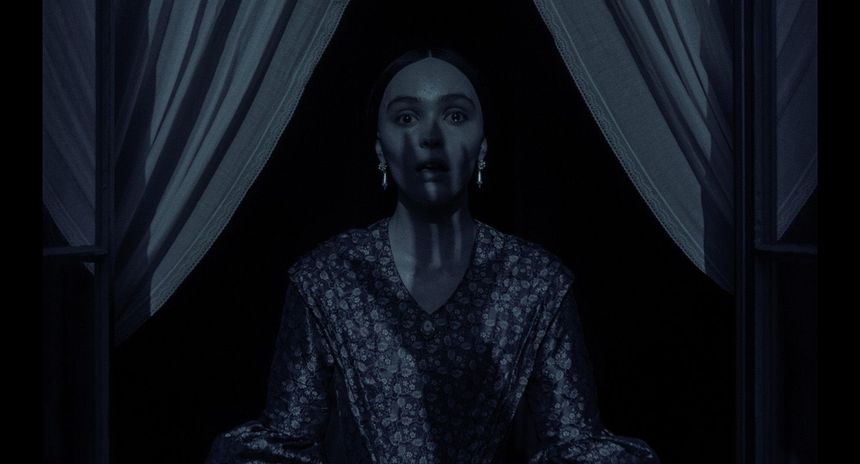
Immaculate, The First Omen, Longlegs, Cuckoo, Abigail, or Nosferatu, this year, cinema offers us a range of terrifying films. Beyond their genre, these films also have in common their main character : a woman. Oh yes ! While we can easily give the genre of the action film to sexist men with their guns and big cars, horror does belong to womanhood.
Could it be the cinematic trend of the year ? Women as an instrument of fear, is it really new ?

Women are a minority in the film industry, and this, since its invention. First, as directors, they still have very little visibility, but above all, they are very little legitimised. As for the actresses, often excluded from the leading role or discriminated against, only a third of the films between the 1980s and 2019 had a female main character.
In the 1970s, a cinematographic genre took place on the big screen and raised demand : horror cinema. With its arrival, several women were able to be entitled to a leading role such as in Carrie (1976), Suspiria (1977), or Possession (1981).
Today, women are like an obvious thing in horror movies — both as heroes and monsters. Even if the genre can offer visibility to women, sometimes its representation is just evil and degrading. ‘Perfect for a horror movie’ you may say, but this representation is a real problem regarding the vision of women in society.
Is horror the genre that allows women to shine or the one that demonises them even more ?
Women in horror movies can be both the prey to a terrible, mysterious, and evil entity as in Antichrist (2009), or the large monster with its hanging breasts as can be famously found in The Shining (1980), Conjuring (2013), or Barbarian (2022).
This ambivalence between the heroine and the monster creates a very particular atmosphere and is almost emerging as a rule to respect when it comes to directing horror films.

The craze for horror films and the place of women on the big screens is even more palpable on social media – and in particular Tiktok. We can see trends such as female rage or scream queens where we can hear screams of fear and anger in the background.
We can find the interpretations of Mia Goth in Pearl (2022), Rachel Sennot in Bodies, Bodies, Bodies (2022), or Jenna Ortega in X (2022). They’re called “scream queens”. But where does this expression come from?
One might think that the term comes from the well-known series Scream Queens (2015), but its origin dates back to the beginnings of horror movie stars in the 1980s. This popular name to talk about these women who scream with open lungs is the subject of a real dynamic between the performance of young actresses, but unfortunately, also their physiques. We see the appearance in the 90s of films with posters sexualising them as with Scream Queen Hot Tub Party (1991), or Invasion of the Scream Queen (1992).
Between torture porn and slasher as an allegory of rape, the woman – even in a leading role – remains locked in the frames of male gaze and the unhealthy idealisation of the body.
The artistic concept of woman as an object of desire and terror is not new. When we take Greek myths for example, many of which we find women-harpies who sexually tempt the heroes. We can also talk about the mermaids that attract sailors in their fierce fangs, Medusa, a victim turned into a monster, or Dido, the queen of fury forced to use magic for love.
These myths are scriptible stories, stories that can be rewritten. Directors and authors are frequently inspired by it to write their stories such as Mary Shelley’s Frankenstein (1818) or Ridley Scott’s Prometheus (2012), both of which are modelled on the myth of Prometheus.
We can then see the horror genre as a rewriting of all the fears of antiquity imaged by women-monsters, or see it as an interesting antithesis for spectators. Indeed, the specialty of this kind is violence. And so… more than just a rewriting, the place of women as the main role is also a commercial strategy that works.
Thinking about stereotypes, it is not surprising to see a man being violent, bloody, horrible, but when the « sweet » woman indulges in the same practices, it shocks and creates a particular interest : buzz. Umberto Eco said about writing, that there is no narrative without eros and thanatos, that these are the main themes of any story. This is probably why horror as a female gender works. Between a symbol of lust and courage, the representation of women in horror is a real feminist and artistic issue.

 OUTERNET MAGAZINE
Laisser un commentaire