

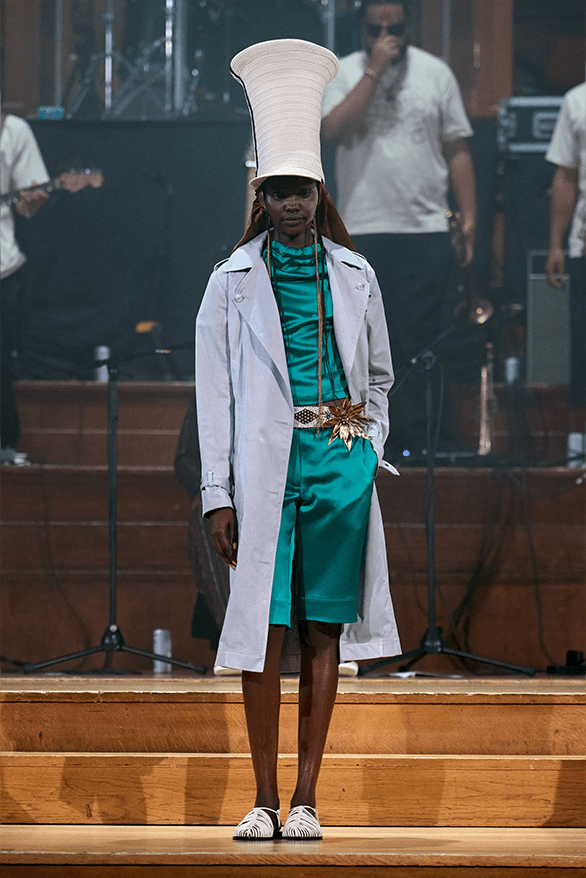
Paris Fashion Week arrived and the catwalk gave us… gowns. Just beautiful gowns. Meanwhile, at the UN, leaders debated policies that could reshape the lives of millions — with Trump using the stage to double down on discrimination. And yet fashion, this supposed art form, drifted along in its bubble, mute to reality. Since the loss of McQueen and Westwood, has the runway been drained of the rebellion that once gave it meaning ?
The death of the message
There was a time when fashion still meant something. The grandes maisons catered the bourgeoisie, while independent names — soon to become legends — fought to rewrite the rules. Margiela, Westwood, Gauthier, McQueen, their visions redefined what a runway could stand for.
Today, all of them are gone — except Gauthier, who has stepped down from creative director — and their brands now shuffle along, zombified in the name of ‟legacy”. Westwood’s collections became a vehicle for strong political and countercultural statements ; Gauthier’s staged gender itself ; Margiela’s dismantled celebrity culture with upcycling ; Alexander McQueen’s laid bare the clash between fashion and mental health. Together, they carried the messages the big houses lacked. Without them, the catwalk feels eerily mute.
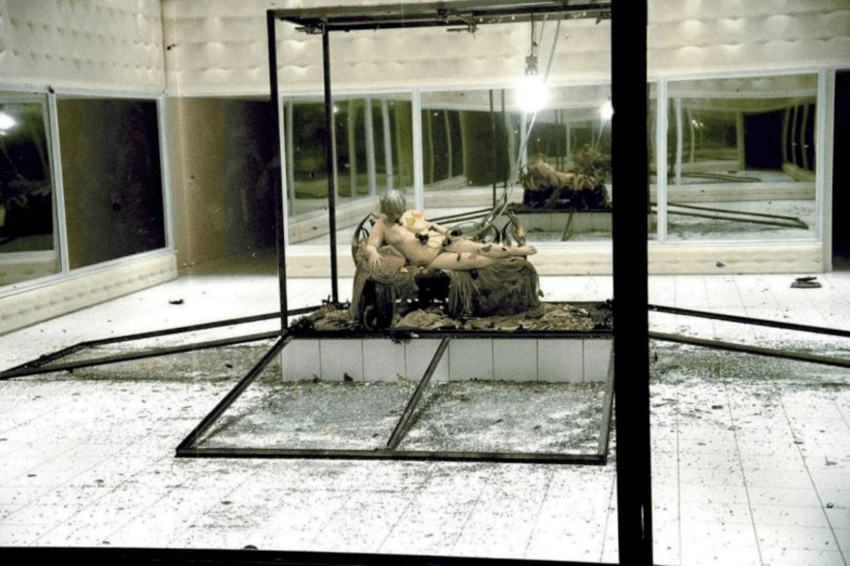
Nowadays, we don’t talk about designers anymore, we talk about brands. Only a few still have their original creative director, and with the endless carousel of replacements, fashion victims have started to feel the instability — a mirror of the dark political times we’re living in. Luxury has become a playground for the ultra-rich — or for those with a millionaire sugar daddy. And even if we could afford it, the clothes themselves feel bland, safe, predictable. Brands that have seen director after director now taste like soup reheated every night for the past 20 years.
Clothes were once a shield against nakedness, then they became a way to express identity. But now, with brands reinventing themselves every morning and designers chasing trends, how can we see fashion as an art form — and not just a pile of clothes with a single message : « buy me » ?
The rise of aseptic commercial fashion, consumer’s complicity
Brands now ‟create” for global markets, and in marketing terms, globalisation means homogenisation — products designed to satisfy everyone, everywhere. And sure, you could be sympathetic : how can a designer — like McQueen once did — use nudity or shock value if, in certain countries, even a slip of fabric can get you in trouble ? But the truth is, not everyone can buy these clothes anyway. Luxury’s audience is privileged, and privilege buys its way out of dress codes. Even if restrictions exist, the wealthy can simply relocate to European cities where marginalised clothing isn’t policed.
Maybe it’s the 4K livestreams, but collections today feel over-polished, drained of the rawness that once gave independent brands their authenticity. At the international level, every stitch is magnified, every flaw becomes visible. And yet, those flaws and that energy were exactly what gave fashion its unique value. Without them, all that remains is a pristine, soulless surface.
Collections today are optimised for Instagram and TikTok virality. Designers no longer create only for the runway, but for the perfect thirty second clip, tailored to the algorithm. Close-ups, zooms, instant reactions — everything seems programmed for the scrutiny of those self-made ‟experts” on social media. These own-made connaisseurs, as loud as they are untrained, dictate the conversation in real time, while fashion journalists or critics are left as afterthoughts. The focus is no longer on the garment itself but on its afterlife online : how it will circulate as a meme, how it will be clipped into reels, how it will look on resale platforms. Value has become speculative, not artistic.
As a result, fashion shows have morphed into luxury theme parks — grand spectacles built for the feed, amplified by the net, where audiences come to be entertained rather than challenged. Once upon a time, a show could shock, disturb, even scandalise… today, it feels more like immersive marketing, curated for likes and liquidity.
So yes, the consumer is complicit too — it’s the law of supply and demand. The system keeps spinning because audiences keep feeding it : likes, sharing, engaging with content flattens fashion into entertainment. Maybe the consumer no longer wants to be challenged — maybe passivity is easier. I’m guilty as well — I scroll, I consume, I double-tap. But still, I believe artistry must return and reattach itself to reality. Otherwise, the runway risks becoming nothing more than a feedback loop : a bubble where designers perform for an audience that doesn’t care about the message, only the spectacle.
The lost subversion
Fashion used to shock in many different ways : nudity, spectacle or political statements. Today, provocation feels staged, co-opted, and monetised — like rebellion on commission. Even activist clothes ring hollow once they’ve been repackaged for the luxury market.
Take Vivienne Westwood. In the ’90s and 2000s, she channeled punk counterculture into her collections, but what often hit the hardest came at the end : when she would step out herself, wearing a simple t-shirt with a blunt political message. That gesture, stripped of theatrics, felt raw, urgent, impossible to fake.

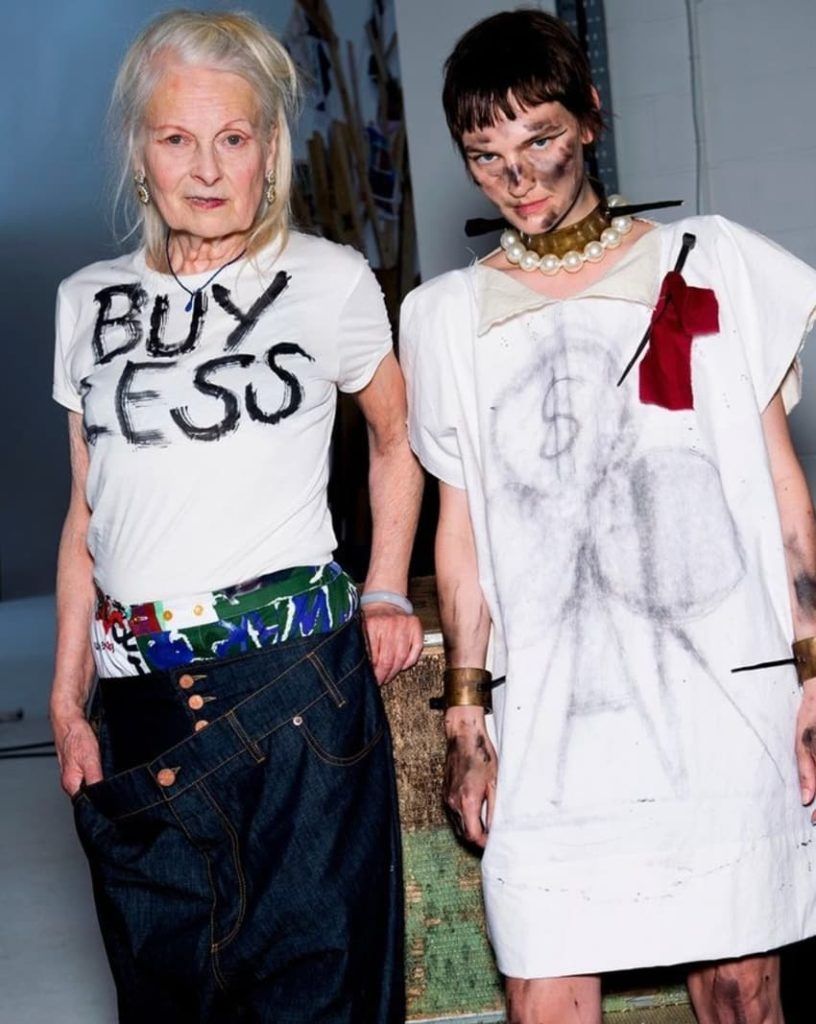
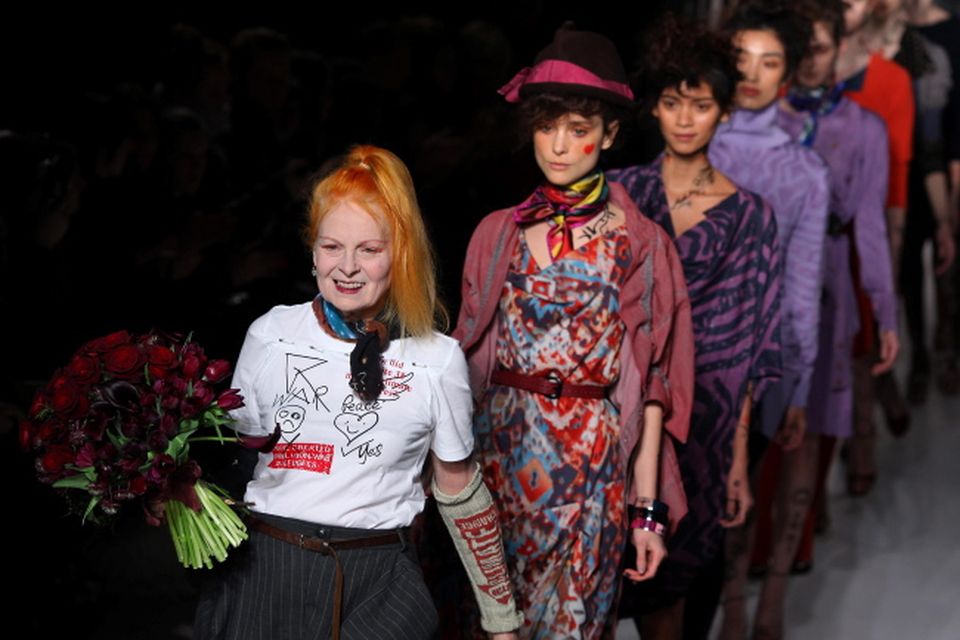


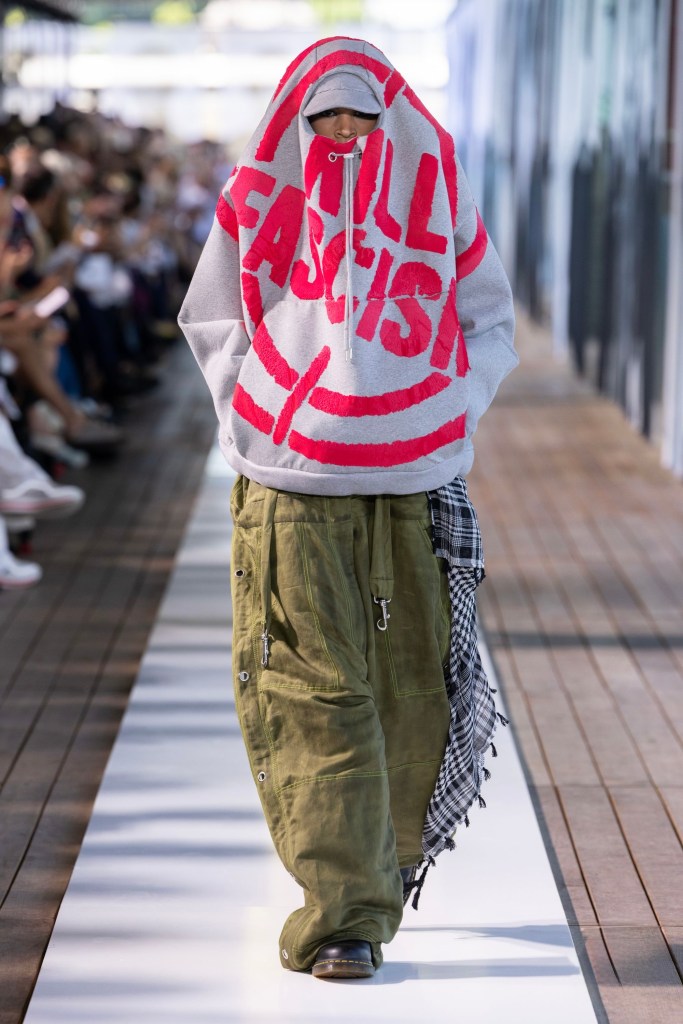
Today, slogan shirts are everywhere — overpriced, staged, and more parody than provocation. Brands like Vetements, AWGE, or Mowalola seem less interested in saying something real, than in looking ‟cool” and ‟edgy”.
Last Tuesday, at Paris Fashion Week, Courrèges presented its Spring/Summer 2026 collection. The looks were inspired by sun protection — Nicola di Felice cited everything from car shades to Middle Eastern veils. On paper, a clever idea. But in France where the right and far-right constantly blame Muslim women for every societal ill, this could have been a genuinely political gesture. Instead, framing veils as ‟sun protection” feels like playing it safe — a missed opportunity to provoke, to challenge, to say something real.
Climate change and durability are noble causes, yet here they come across as bare minimum — safe talking points rather than bold statements. The collection ends up feeling more dystopian than activist : futuristic outfits for a world where the poorest can’t survive the heat. Courrèges shows fashion, yes, but courage ? That remains firmly off the runway.
Exceptions that prove the rule
Some designers still carry a form of attachment to reality and to what the world is facing nowadays. Katherine Hamnett, famous for her 1980s Choose Love t-shirts that raised awareness about AIDS, returned in August with a campagne titled End Genocide. This initiative raises money for Noor Gaza Orphan Care (NGOC), providing comprehensive care for more than 20,000 children orphaned in Gaza.
Huda Kattan, founder of Huda Beauty, also spoke out about the genocide in Gaza, donating one million dollars in November 2023 to two humanitarian organisations working on the ground. Foday Dumbuya, founder of Labrum London, uses his platform to engage with world conflicts as well : through a collection merging English and African heritage, he invokes resilience and cultural pride in the face of the genocide in Congo. And suprisingly — because she won an LVMH prize — Torishéju stated for her latest collection : « I wanted these clothes to represent the world we’re living in right now ».
But if the future of fashion is supposed to be shaped in fashion schools, then it’s worth looking there for signs of change. Among the students, one stood out more than the others for me : Zelig Davoult, who presented his collection VIENDRA LE TEMPS DU FEU (WILL COME THE TIME OF FIRE) in June. His fifth look, FROM THE RIVER TO THE SEA, a striking keffiyeh dress, seemed to embody a rare form of courage on the runway — political, raw, and undeniably present. It was a reminder that fashion can still shock, still provoke, if only someone is willing to risk the applause.
And yet, for every Zelig Davoult, there are dozens of collections that seem more concerned with ‟cool” than with conscience, more about Instagram likes than impact. In the end, Paris Fashion Week may remain a festival of spectacle, but glimpses of reality — like a keffiyeh dress among silk chiffon — prove that meaningful fashion isn’t dead. It’s hiding in plain sight.

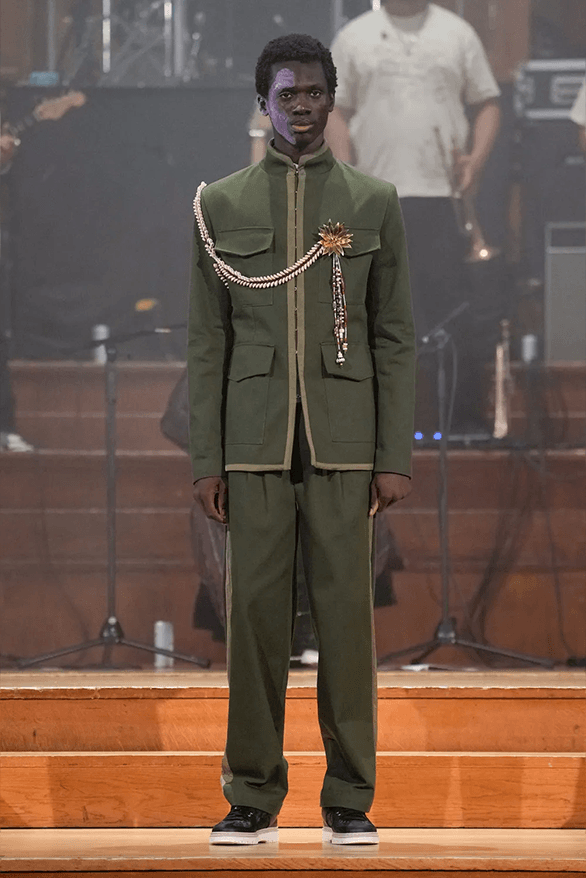



Conversation with Miguel Adrover
Miguel Adrover was once hailed as New York’s brightest new star. The Majorcan designer shook the industry in the late ’90s with collections blending activism, recycled clothes and sharp political statements. But after showing a collection inspired by where he was living at the time, the Middle East, in September 2001, he was swiftly sidelined by the same fashion world that had celebrated him. Today, as the runway gets emptier in meaning, his words resonate like a reminder that fashion has never been just about clothes.
YOU’RE BORN IN MAJORCA IN 1965, THEN YOU MOVED IN THE ’80S TO LONDON, AND IN THE ’90S TO NEW YORK. HOW DID THIS JOURNEY SHAPE YOUR VISION OF FASHION AND SOCIETY ?
The truth is that I’ve never been interested in fashion. It just happened accidentally when moving to New York. There, I’ve got to be able to be close friends with Lee [Alexander McQueen]. I used to do research and consulting for his shows in London. Since then, I saw the power that fashion held in society.
I always been an activist : for indigenous rights, climate change and social consciousness. That’s what attracted me : having a platform to denounce the system. I was able to get inside the industry and talk from the inside — that’s why people paid some attention to me. I was up there, I was New York’s new star — it was all over the newspapers and the magazines. But the truth is that I’ve never had any passion for it. I saw fashion as something really superficial.
I wasn’t even aware of fashion houses like Yves Saint Laurent, Chanel, or any of these people. I related these names to perfume. [laughs] As a kid, when I was living in a small village, I used to often go to a perfume shop where a friend was working. Saint Laurent, Chanel… I thought it was just perfume. [laughs] I didn’t even know it was fashion.
But I did spend a lot of time in London when I was younger. I used to do an exchange with a family : the kids came here, in Majorca, in the summertime, and, in the winter, I went at theirs for one month — or two sometimes. And when I was around 13 years old, the punk movement happened. And after that, came the goths, the New Romantics, and all these new waves that connected clothes, music and art, all together — but never in a way of what fashion is today. There’s nothing related to that.
WHEN YOU PRESENTED YOUR COLLECTION MANAUS/CHIAPAS/NYC IN NEW YORK IN 1999, YOU WROTE FOR YOUR SHOW NOTES : « MY STATEMENT IS A POLITICAL ONE. I AM BEING HONEST, ABOUT MY INSPIRATION, AND ABOUT THE REALITY I SEE ». DOES THIS QUOTE STILL REFER TO YOUR PRESENT WORK ?
Nothing has changed. It’s even worse now because of phones — I didn’t use any for 12 years now — and all these conglomerate corporate brands, like LVMH or Kering. Today, fashion is so detached from reality. It’s so embarrassing. Fashion has a big power on young people these days because corporate plans use music and movie stars, and influencers — that they buy.
I’m really upset me, is seeing all these American celebrities going to front rows, parties, and fashion shows . It’s more disturbing knowing that, in their own country, freedom of speech is almost completely lost and people are kidnapped by ICE on the streets. It seems that fashion holds this power : erase reality for the youth.
The quotation from 1999 didn’t changed at all. It’s even worse : now we are in the middle of a genocide, and everybody keeps quiet. It’s a shame… it’s really vile, devious, diabolical ! And of course, younger people follow these ‟icons” — sold to big corporates and in lack of authenticity.
Also, I just found out that Rosalía and Pedro Almodóvar are participating in a capsule collection for Zara — which just opened two flashy stores in Tel Aviv. And the other day, Pedro Almodóvar was in a manifestation for Palestine ! It’s so pathetic ! It just money talks. And the funny thing is everyone saying « I don’t want to talk about politics » — but it’s what really affects everybody’s life.
COMPARED TO THE ’90S, THE SITUATION NOW IS WORSE…
Before, young people still had a little bit of hope. If they went to fashion school, once they got out, they could build their own brand. Now, everybody forgot about that. People just want to be creative servants for big corporate brands like LVMH.
NOWADAYS, INDEPENDANT FASHION CAN’T SURVIVE…
It has been more than a decade now and there are no more independent designers, only corporates. And what happens is so surreal. They resurrect all these dead designers — who’s been gone for decades already — and they open these big brands with all this money and celebrities. They’re zombie brands.
Younger generations don’t have the power to spread their true selves anymore. I guess there’s a lot of designers out there that would support Palestine and be against the genocide. But if they say something, they would be out of the game, without any contract. Even myself, for example, I can’t have an interview in a fashion magazine because the advertisers would pull out — because you talk the truth. It is really evil.
And racist too ! Since the Black Lives Matter movement started, what changed for black people in the United States ? Nothing, nothing changed at all. What happened in the fashion industry ? Yes, you see many black girls doing catwalks, doing cover of magazines… But it is just aesthetic. It’s not something for real. When Russia invaded Ukraine, everybody supported them, everybody was waving their little Ukrainian flag. Zelensky’s wife even was on the cover of the American Vogue. If what happens in Palestine would happen in London or in New York… The fashion industry would be all over the place — crying and calling for help and consciousness. But it is not… It’s just so racist. When something really serious happens in society, the fashion industry loses all its power because it’s totally detached from reality. It lives in a bubble, a trap disguised as « an escape from reality ».
HOW DO YOU SEE YOURSELF AS AN ACTIVIST ?
I see myself alone… hopeless. Although I do reach a lot of people who agree with me, my speaker is not big enough. But I do believe that the truth always comes to the surface. For instance, John Galliano, while being drunk, commented on the Holocaust, and he said some crazy stuff. The next day, he got fired from Dior. Today, for two years already, we are the witnesses of a Holocaust orchestrated by Israël. But if you say something about it, you will be fired. What is going on ?
AND DO YOU FEEL LIKE ART IS REALLY EFFICIENT IN CONVEYING THIS POLITICAL MESSAGE ?
Art is connected to reality. If it’s not, it’s just decorative art. Because I knew we would have the interview today, last night, I watched the Louis Vuitton and Saint Laurent shows. I saw : these big set designs under the Eiffel tower and inside of a parlour, these people sitting front row, these influencers… Oh my god ! It’s just… [big sigh] I just don’t know how to describe that.
After, I switched to the news, and I saw little girls being killed on the streets, a mother holding her baby with no legs… blood everywhere. People are starving to death. And on the other side, you see all these people : celebrities, pop stars, sitting down front row, watching ‟beautiful dresses”. How many ‟beautiful deaths” do we need to see ? How many do we need to see ?
I remember the AIDS epidemic. Fashion designers, musicians, artists were all trying to help. I’ll tell you why they keep quiet today : it’s because of corporate brands — they’re the one ruling the world. The fashion world is all so commercial, associated with movie stars, celebrities, and influencers. It’s so pathetic to see these influencers, on TikTok and Instagram, looking up every little detail of clothes — like everybody’s an expert of aesthetics and brands — and not paying attention to the real things that are going to affect them : freedom of speech in the United States… trans rights… and even, the other day, they said that they wanted to take out the medication for HIV positives… and nobody mentions anything.
AND WHAT ABOUT PHOTOGRAPHY ? IT SEEMS FOR YOU TO BE A BETTER MEDIA…
Yes, fashion requires such a financial structure. You need a big team : patron makers, seamstresses, and so many creative people. You always need to sell something at the end of the day — that doesn’t really attract me anymore. I’m a brand. I’ve been there for almost 25 years now, but at the same time, I didn’t sell anything for almost 20 years. Recently, I started selling some baseball caps and sweatshirts in order to fund my other projects. For many people, success is based on how much you sell, how much you make money out of it. But I don’t believe in that. For me, success comes without any money compensation, it comes with being loyal to reality and being authentic — that is much more important.
I have more than one outfit, I live in the countryside in an old house with my dog and my family — and I really don’t need no more. The biggest problem today is greediness. Everybody’s greedy. Everybody wants a half. And that’s why when money talks, everybody shuts up.
ARE YOU PESSIMISTIC ABOUT THE SITUATION ?
I don’t know. I hope one day we’ll live in harmony with everything — nature and human beings. But I think technology is going to take us to an unknown future.
I see, somehow, society like a highway. At the end of the highway, very, very far away, there is a big billboard saying : fame, fashion and power. And everybody is driving towards the sign. But you never get to the sign. And you see, on the sidewalk, on the highway, a lot of piled up cars being crashed — in trying to reach that. And on the opposite side, you find a little world without any government, where you don’t have any goals, other than get some meaning. Because today, I don’t know why we’re driving anyway.
IT’S SUCH A DARK PLACE RIGHT NOW, WE FEEL THAT THERE’S NO MORE LIGHT AT THE END OF THE TUNNEL… IT SEEMS LIKE COMPLETE DARKNESS.
It really is overwhelming. I’m old, and I don’t know… New generations better wake up and learn that fashion is not going to save them. If something really crazy happens, you don’t have any power. And some people will be there, holding their Louis Vuitton bags, thinking it’s going to save their lives… my God !
God save the planet and God save humanity. Everything is so detached from reality, and there’s so much hate everywhere, that it’s hard to find hope. But we need to still be fighting.
I’m going to continue fighting.
 OUTERNET MAGAZINE
Laisser un commentaire