
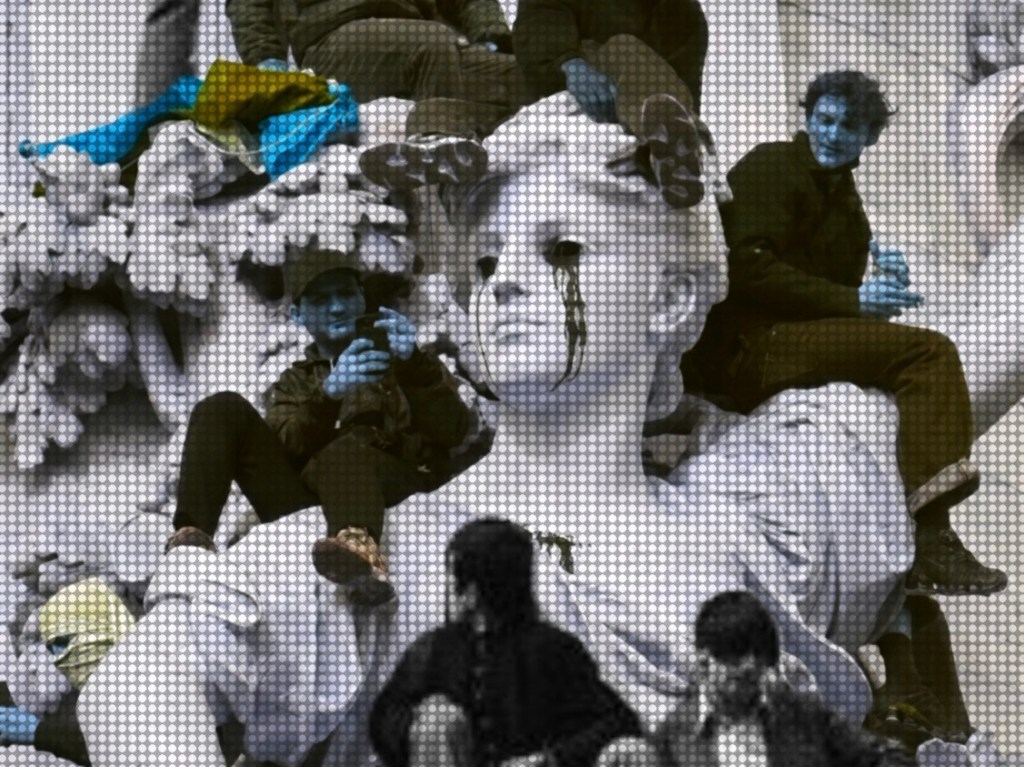
From the buried massacre of October 17, 1961 to the brutalisation of contemporary processions, the maintenance of order is part of a long institutional trajectory. Through our interviews with sociologist Mathieu Rigouste, historian Fabrice Riceputi and director M’Hamed Kaki: analysis of a system that continues to tear apart the relationship between the State, youth and the street.
Peacekeepers or law enforcement ?
Between the protection of citizens and their freedoms, and the preservation of state authority, the border continues to move. As the protest is assimilated to a security threat, the maintenance of order is getting tougher. During the recent high school mobilisations and in view of the October 17, 2026 rally, a question arises again: where does the democratic supervision of a procession stop, and where does repression begin ?
The sociologist specialising in the security order Mathieu Rigouste explains: « The concept of law enforcement, in police language, refers to the use of the police against what they call crowd control. It is the management of demonstrations, revolts, etc. We can also differentiate the institutional maintenance of social order on a daily basis, from repressive apparatuses that work to break the struggle and break the confrontation ». But this border does not work everywhere since in popular neighbourhoods, the sociologist observes a real fusion between daily oppression, which targets bodies by their mere presence, and direct repression that falls on them as soon as they mobilise and resist.
However, this logic of exception is part of a long history. The historian specialising in colonial issues Fabrice Riceputi recalls the existence of a « state repression » forged in the colonial context. At this time, not benefitting from the rights of French citizens, colonised foreigners have long served as « police game », to which the institution could administer « very exceptional police treatment ». From the treatment reserved for the colonised yesterday to the methods used in the streets today, the same question remains: do the police protect the citizen or do they seek to stifle the protest? To analyse how this state violence was structured in the heart of the metropolis, we decided to go back to one of these historical fields of experimentation: the drama of October 17, 1961.
October 17, 1961 or the « imperial boomerang »
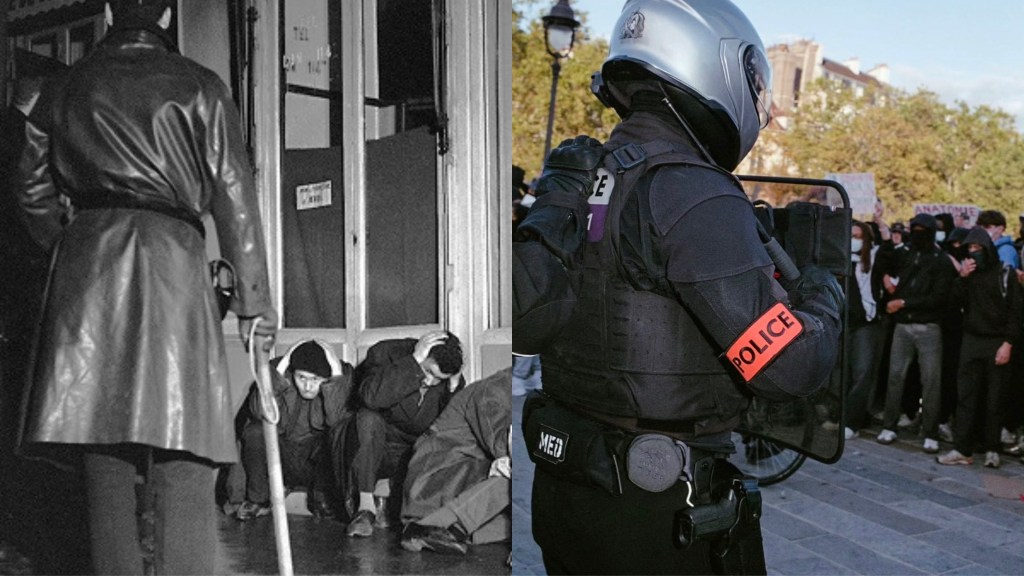
The story of October 17, 1961 is neither a matter of various facts nor of simple « bavure ». To understand the violence that befell that evening, on the tens of thousands of Algerians who came to demonstrate peacefully in Paris, it is necessary to dissect the mechanics of institutionalised police repression. According to Rigouste, the French police apparatus has been forged over the centuries in the crushing of protests. It is a history « anchored in several centuries of crushing colonial insurrections, peasant insurrections, labour uprisings ».
From the end of the 19th century, the police seized identification methods from the slave system, such as « sketches of silhouettes to designate enslaved bodies ». This culture of order maintenance would therefore have flourished in the colonies before being repatriated to mainland France. This is the phenomenon of the « imperial boomerang« , theorised by Césaire and taken up by Arendt, consisting of importing colonial repressive methods into the heart of a national territory, to repress mobilisations and insurrections.
The roundup: impunity and « killing license »
In October 1961, this doctrine was embodied in the figure of police prefect Maurice Papon. As Riceputi traces, this repression is based on exceptional logistics. The imposition of a curfew targeting only Algerians is applied brutally and to the face by the police. Faced with the peaceful boycott ordered by the FLN (National Liberation Front), the Prefecture orchestrates « one of the largest police raids in the history of France ». Nearly 12,000 people are arrested in less than 24 hours by the police. On board RATP buses requisitioned for the occasion, the victims undergo the « hedge of honour » upon their arrival in the detention centres: an obligatory passage between two rows of police officers who beat them with batons.
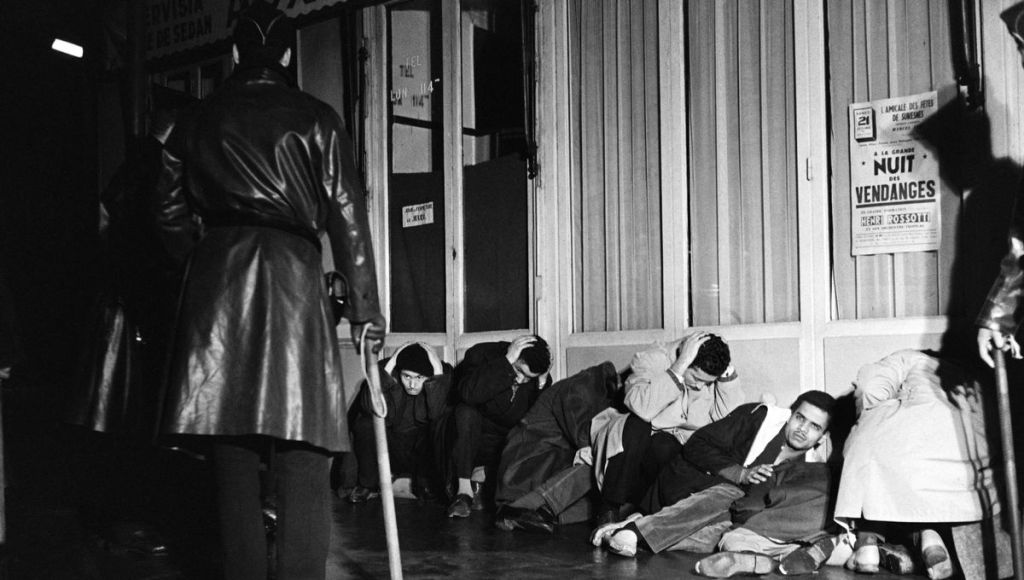
The archives exhumed by Rigouste show that Papon theorises the need to treat mass demonstrations through the « counter-revolutionary war ». « All this explodes on October 17, 1961, but it is the culmination of a deep mechanic. It’s absolutely not an accident, it’s not a drift, it’s not a burr, it’s the application of a system ». By declaring to the brigades « For a blow received, we will return ten », the police hierarchy issues a real killing license. There are live bullet shootings, beatings to death, but also drownings in the Seine. Riceputi explains that this system of repression will benefit from an « amnesty organised from March 1962″, sealing a model of police impunity that stifles the real toll, estimated at about 300 deaths.
Sixty-five years later, this repressive trauma remains a major political significance. As Rigouste summarises, young activists from popular neighbourhoods « grew up in a political ground where October 61 was a fundamental event ». Understanding October 17, 1961, thus comes to grasp the genealogy of a maintenance of the order of exception, whose brutality and methods still resonate today in the repression of contemporary protests.
From « slippage » to continuity
However, it would be misleading to tell the story of the French police as a straight line that would lead from 1961 to police violence in 2026. Between the two, the governments succeed each other, and the techniques of maintaining order are transformed. In 1968, for example, Prefect Maurice Grimaud tried to calm relations between police and demonstrators. But this limping does not prevent the deaths of May 68. For Fabrice Riceputi, the history of the police is rather made up of a succession of periods of hardening and relaxation.
Since the 2000s, however, something would have hardened particularly. Riceputi places in particular under the governments of François Hollande, Manuel Valls and Bernard Cazeneuve the return of a « brutalisation of demonstrators », first exercised in popular neighbourhoods. Riceputi speaks of a « permanent police at the faciès ». For Mathieu Rigouste, talking about a « colonial past » would almost amount to locking colonisation in history books. « It’s a colonial present, » he says. The North African Surveillance Brigades, created to control the colonised populations in the French metropolis, are for him one of the direct ancestors of contemporary police devices. The BAC, he says, thus have a « colonial genealogy » and now serve as a « crushing police » in popular neighbourhoods.
This is where the word « slippage » becomes problematic. « You have to stop with the expression « the police are freewheeling ». This is not true, « explains Rigour. For him, when an agent is sanctioned by his hierarchy, it is because he has crossed a limit. But when a police officer mutilates, mutilates, or even kills, and remains in office, « it is because he has done the work that was asked of him ». He adds that often they do not simply remain in the police force, but still evolve there. They get their transfer or progress in the hierarchy, « they are rewarded ».
The Inspectorate General of the National Police, supposed to investigate police officers, has long concentrated criticism on the conflicts of interest involved in a police force in charge of investigating their own institution. For Riceputi, the IGPN is « an accessory of impunity ». And it is perhaps in this denial and this ability of the State to produce violence, then to organise the conditions of its oblivion that 1961 and 2026 meet most clearly.
In 1961, it took decades for the massacre to be (albeit partially) officially recognised. In 2026, each new case of police violence reactivates this same question: what happens to violence when the State refuses to look at it as an institutional problem ? Procedures exist, cameras are filming, but the media and systemic mechanism ultimately remains quite familiar. The facts are always isolated, reparations are never given, and the State does not stop « condemning » until the indignation subsides.
Revolts : from memory to the street
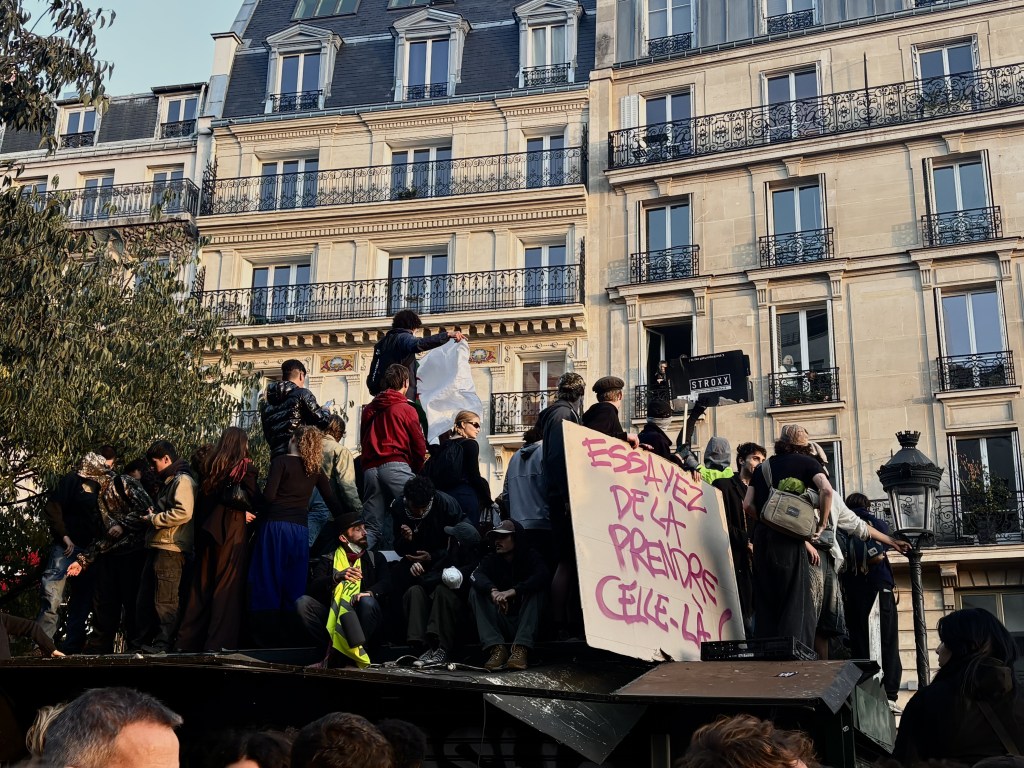
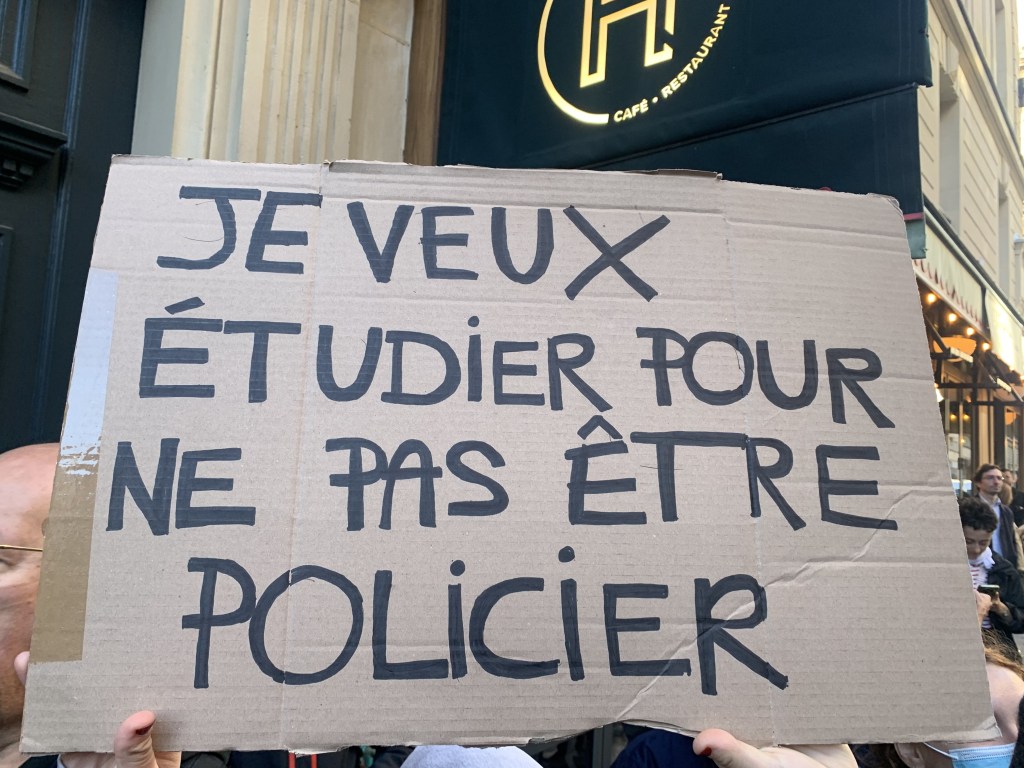
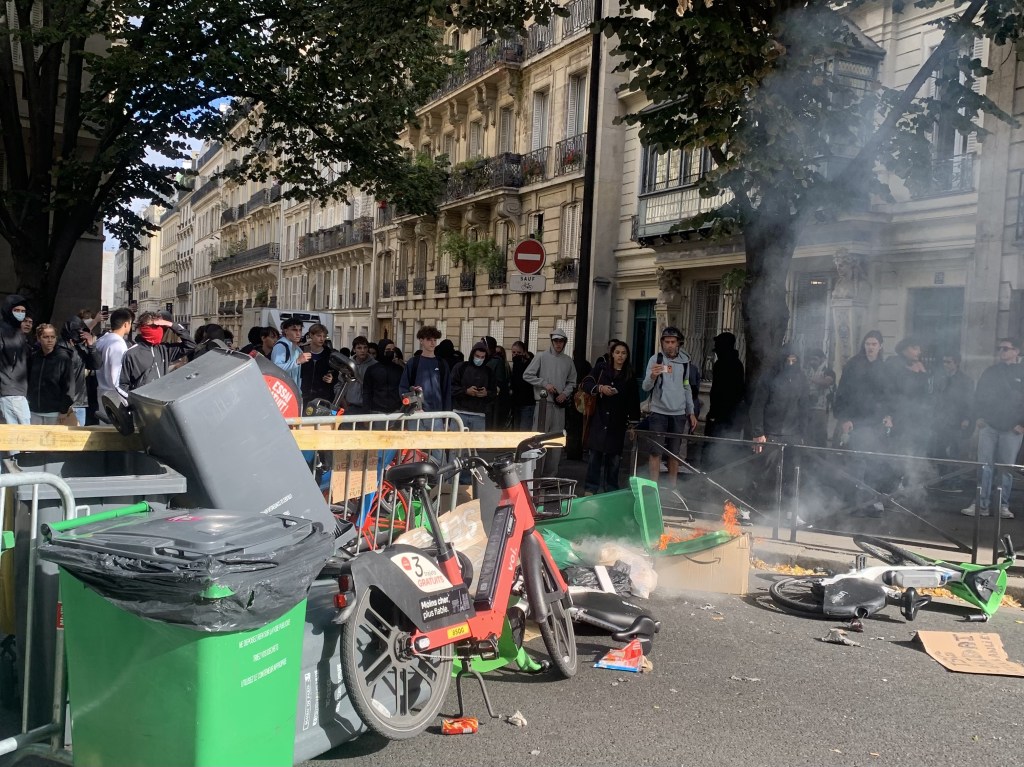
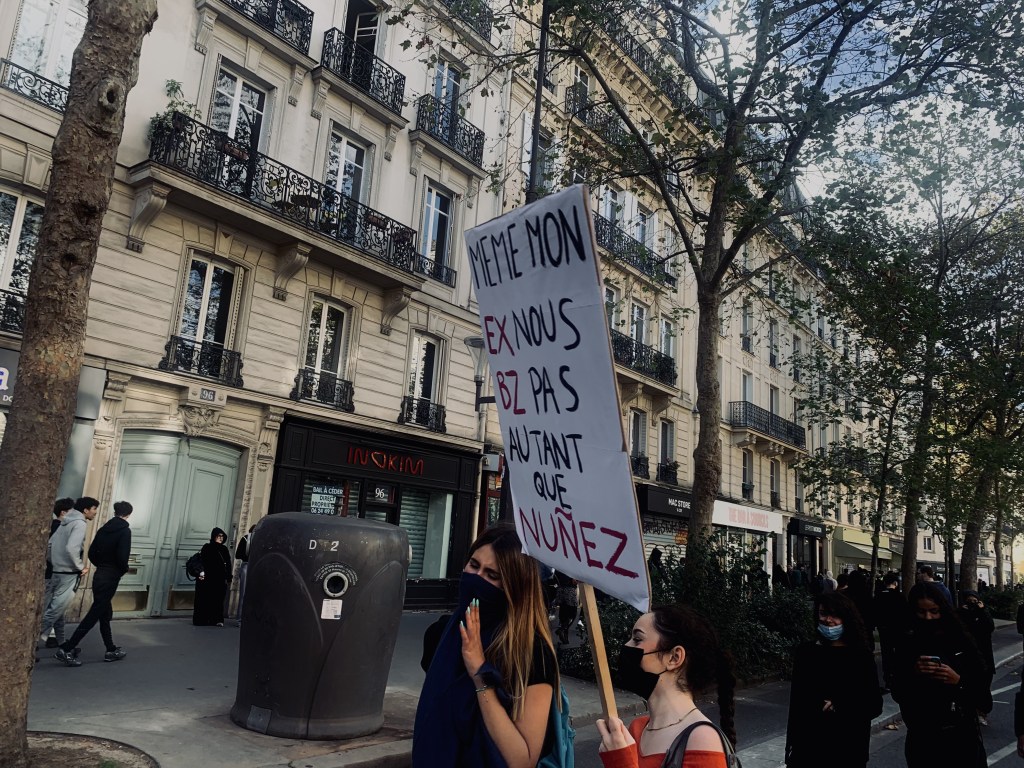
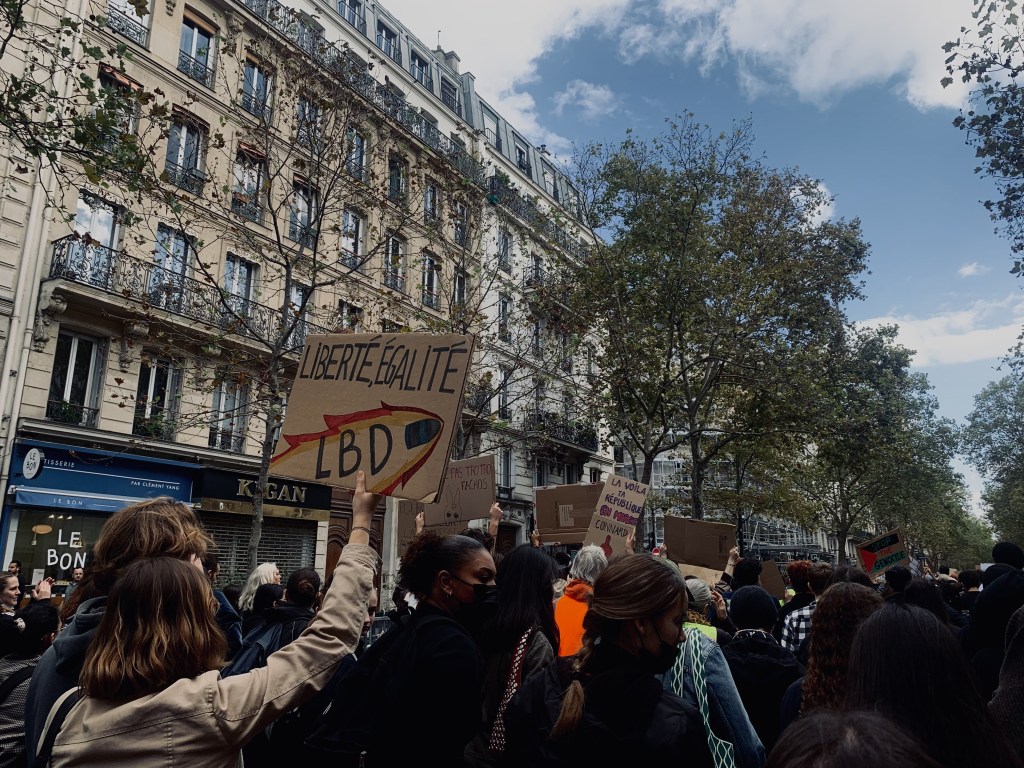
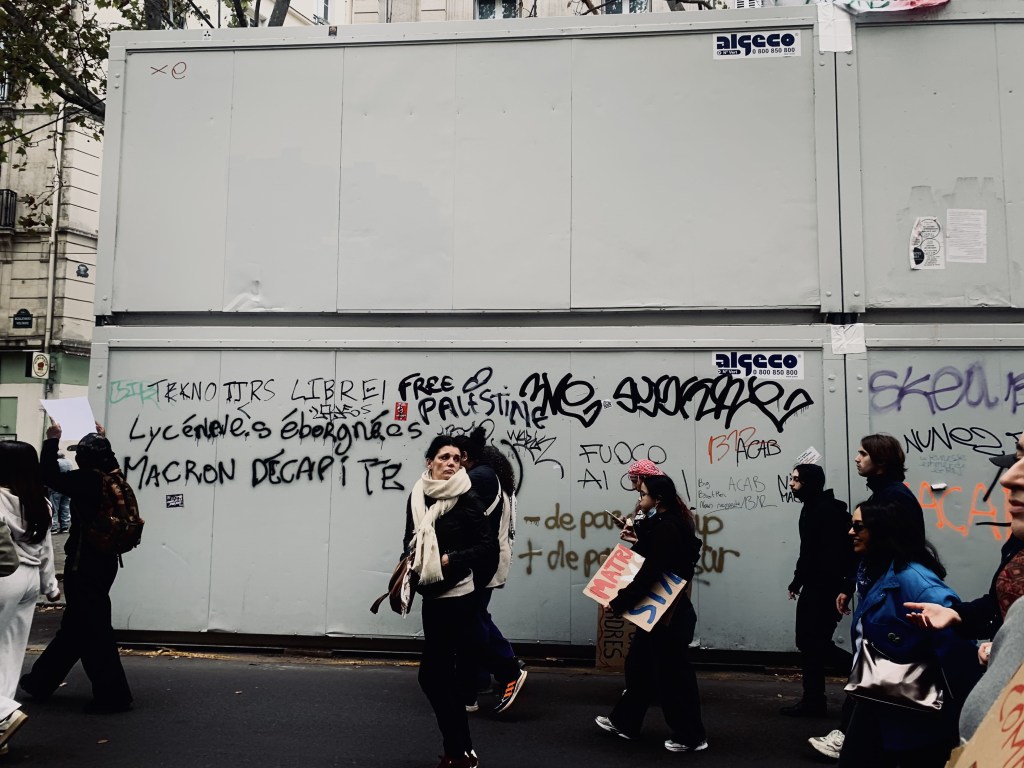
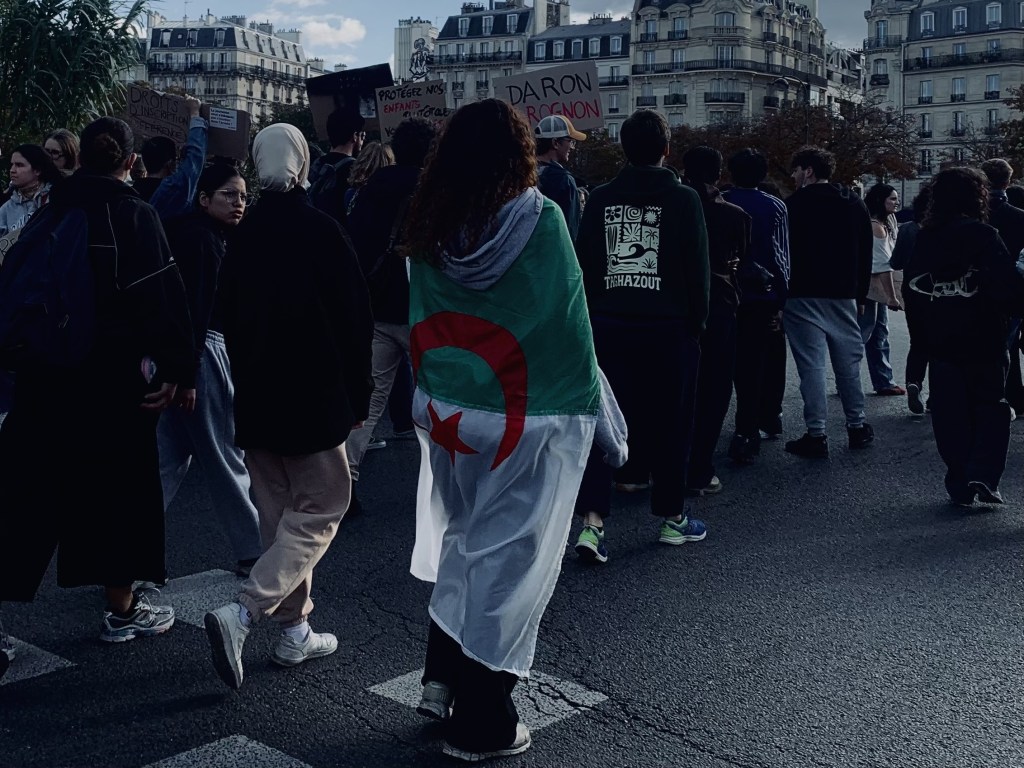
On Saturday, between 550,000 and 800,000 people finally demonstrated across France, according to figures from the Ministry of the Interior and the organisers. In Paris, the police tried in the morning to prevent gatherings around the stations and the centre of the capital, but the movement quickly escaped the traditional procession. Small groups circulate, disperse, reappear elsewhere. Many seek to join the Concorde, the Opera or the surroundings of the Elysée, and the clashes last until the evening.
The toll of the day is heavy : nearly 2400 arrests are announced by the government, while several hundred members of the police are injured. On the side of the demonstrators, there are also many injuries and several investigations are open on the conditions of police intervention. In Mulhouse, a 17-year-old teenager loses the use of one eye after being seriously injured on the sidelines of the mobilisation. The prosecutor’s office then seized the IGPN with an investigation for « aggravated violence ». In Paris, a demonstrator also dies after making a malaise on Boulevard Magenta. According to the police prefecture, he was the victim of a cardiorespiratory arrest. The precise circumstances of his death remain to be established and no evidence communicated at this stage allows him to be associated with clashes or police intervention. In Saint-Etienne, a 17-year-old had his hand torn off. In many cities, public buildings and shops are attacked or burned. In Limoges, the town hall is affected by a fire, while in Marseille, the town hall is targeted.
For M’hamed Kaki, who has dedicated a play to the Algerian demonstration since 2021, transmission is what makes it possible to circulate history from one generation to another. His father was present on October 17, 1961. As a child at the time, Kaki later discovered this story in family conversations. His play 17 octobre 1961, Je me souviens… became for him an « intergenerational meeting place ». He deplores the absence of stories made by Algerians, far too often told by people outside the community. On stage, the past is never completely separated from the present. « In my work, I also wink at what is happening today, » he explains. For him, the parallel also lies with the violence against the bodies: « It is an organised state crime, we have repressed to the point of crime. It also echos the torn hands and eyes, as we saw with the high school students. »
But this memory does not mechanically produce an awareness. Mathieu Rigouste observes that some demonstrators are now discovering police violence that others have been facing for a long time. « Who is discovering the fear of the police today? « . For him, this discovery can be a first step towards action. We still have to go further than indignation. Gases, mutilation, beatings are, according to the sociologist, only the visible part of a broader device that also affects popular neighbourhoods, prisons, exiles and colonised territories. « You have to get out of the feeling of indignation to be able to fight, » he says.
The next day, the power responds to the street. In a televised address, Emmanuel Macron condemns the violence committed on the sidelines of the mobilisation, denounces « factions from ultra-left groups » and affirms that « nothing justifies it, nothing explains it, nothing excuses it ». It also supports law enforcement and calls on the government to learn « all the lessons » of the day in intelligence and anticipation. But in this speech, the issue of police violence appears above all through the promise of « transparency » on the strategy of maintaining order. The president also announces that he wants to bring together political parties, trade unions, student organisations and communities in order to respond to social demands.
The next morning, however, Laurent Nuñez submits his resignation and Emmanuel Macron refuses it, invoking the need to ensure a « continuous command of the police ». He asks him to deploy « as soon as possible » new modes of action against thugs. A new investigation by the IGPN is therefore opened while the institution responsible for controlling the police remains itself at the heart of the criticisms made by our interlocutors.
The memory of October 17, 1961 then returns to its starting point: the street. Between 1961 and 2026, the contexts changed, the police (at least their uniform) too. But the state continues to repress rather than listen. For Kaki, « it is unbearable for some to see people challenge the state ». For Rigouste, history gives another answer: political transformations do not come only from the recognition of violence, but from the balance of power that is built in the face of it.
October 17, 1961 was long bearied under silence. On October 17, 2026, the street was again saturated with screams, demands and violence. As long as force remains the main language addressed to protest, the silence of 1961 and the saturation of 2026 will only have displaced the fracture line, without ever reducing it.



Votre commentaire