
Last week, from September 24 to 26, flaming single-seaters, neons and glitter invaded the Caspian Sea. On social networks as well as in search engines, the Azerbaidzhan Grand Prix transforms Baku, its capital, into a futuristic showcase. Meanwhile, the ethnic cleansing of Nagorno-Karabakh and the military axis with Israel are erased from the landscape. An analysis conducted with the eyes of the Charjoum movement and the Franco-Armenian content creator Heno KRP. Decryption of a machine to make ignorance.
Formula 1, a new trendy sport?
Before being a geopolitical theatre, Formula 1 has made an unprecedented media facade renovation. Long confined to motorsport insiders and an ageing audience, the discipline is gradually becoming a global pop culture phenomenon again. Driven by the success of the Netflix series Drive to Survive, this turn has been accelerated by an unprecedented hybridisation between mass sport, luxury and digital influence strategy. In paddocks around the world, technical stands have given way to a social VIP podium. The appearances of figures such as Kim Kardashian or Alexandra Leclerc, rubbing shoulders with the princesses Maria Carolina and Maria Chiara de Bourbon des Deux-Siciles, have transformed the Grands Prix into open-air parades.
In France, Gen Z’s enthusiasm for speed has been multiplied by events such as the GP Explorer, accustoming millions of young users to consume this sport through the prism of entertainment, aesthetics and personal storytelling. This re-glamorization has made F1 the ideal vector of soft power where this glittering and visually irresistible show becomes a gateway for authoritarian regimes in search of international respectability.
An algorithmic smoke screen
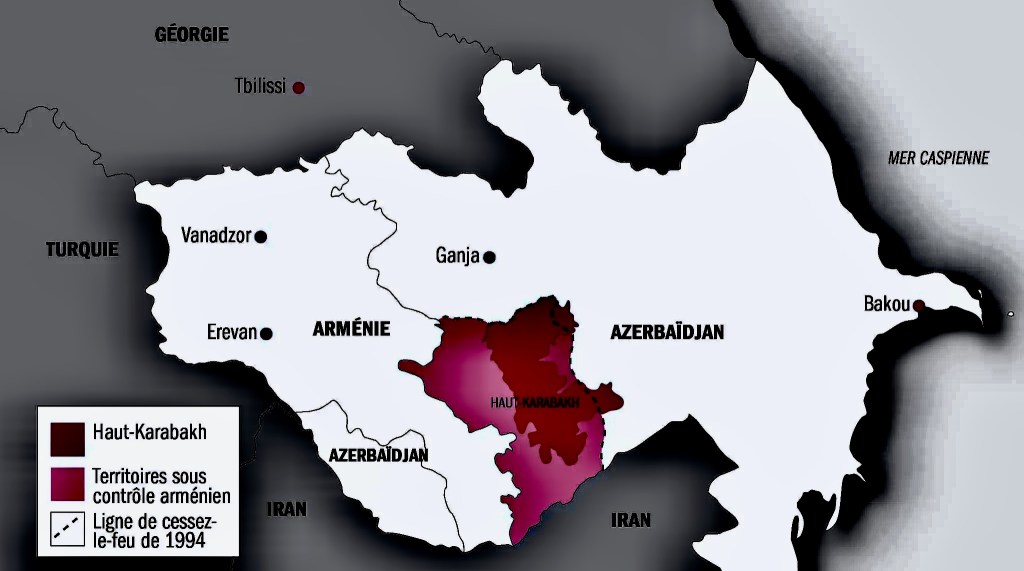
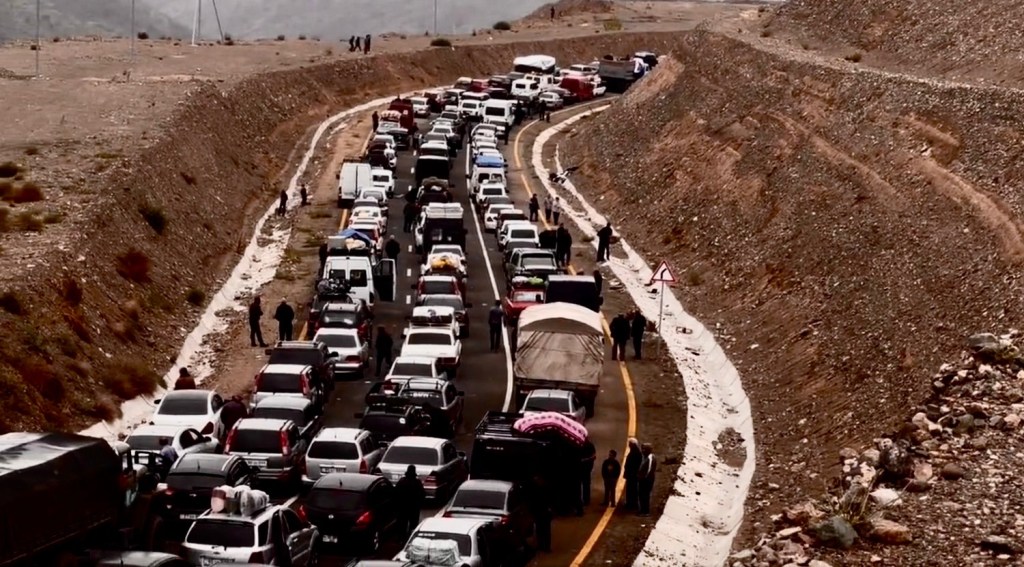
However, this amnesia operation comes up against a tragic historical lock. In September 2023, an Azerbaijani military offensive in Nagorno-Karabakh led to the hasty exodus of more than 100,000 civilians. Populated by 90% Armenians, this landlocked region remains arbitrarily attached to Azerbaidzhan, since the division imposed by Stalin in 1921. Such an operation was described as ethnic cleansing by multiple observers and international organisations.
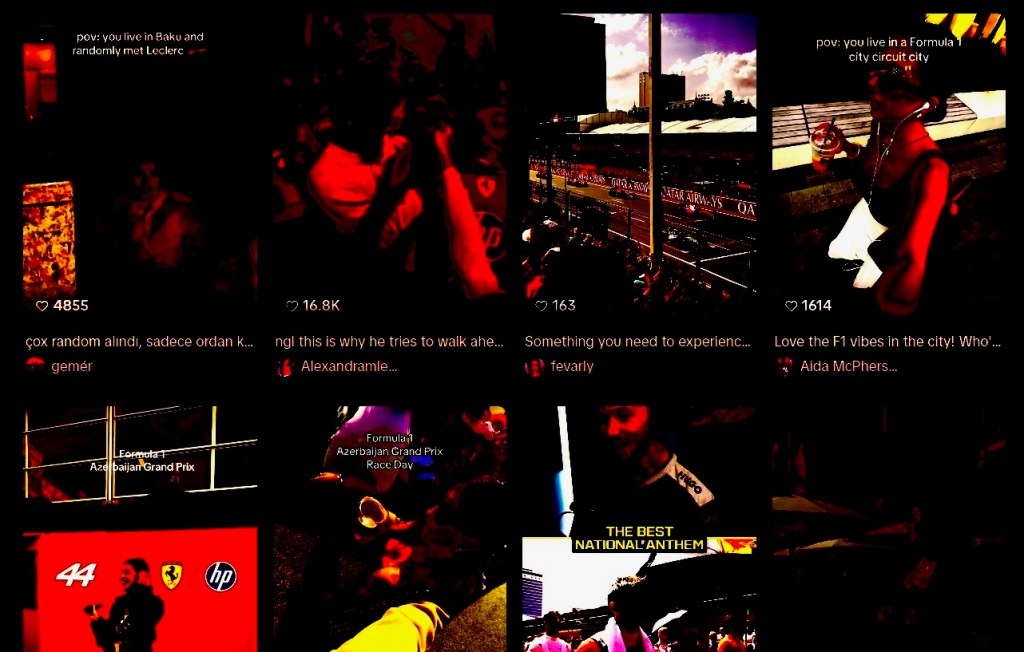
However, on social networks, the propaganda machine is running at full speed, supported by controversial Western influencers like McPao. In a TikTok video shot during a stay in Baku, he unfolds the storytelling of the authorities, describing the city as a « mini Dubai » before adding, sure of himself, « from a political and geopolitical point of view, it is very stable ». The instability of displaced populations and authoritarian internal repression are thus swept away with a backhand, in favour of the narrative of commercial stability. This bet, not so risky, pays off and the comments of subscribers do not run out of praise for the city: « I’m thinking of investing a small ticket too, a lot of projects on Baku, it’s a very good city », « Go there for the F1 grand prix it’s great » or « It makes you want to go there for a ride ».
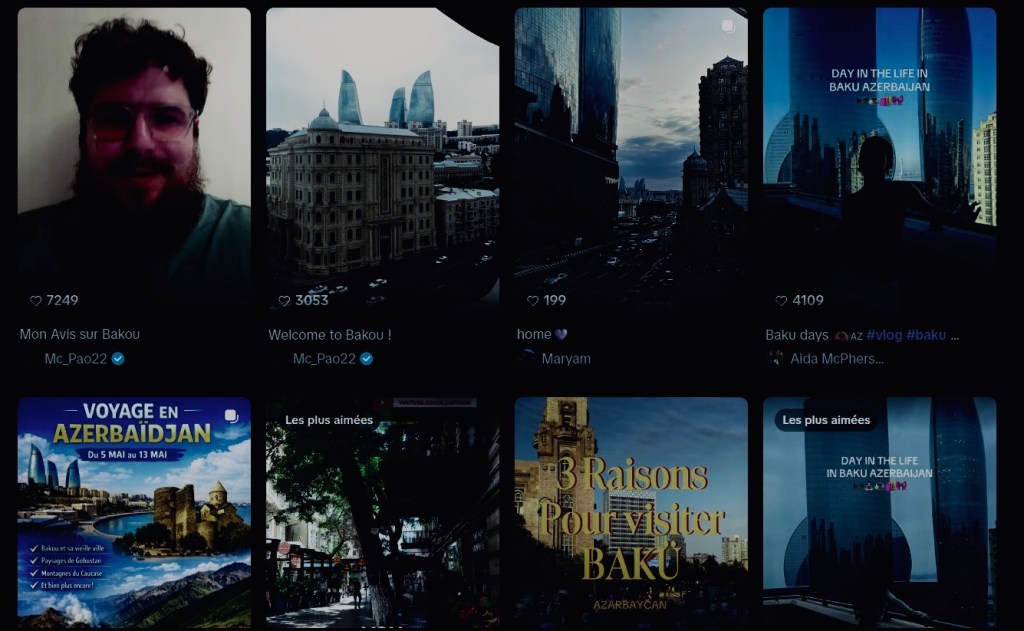
It is precisely at this intersection between mass entertainment and the denial of memory that the digital counterattack is articulated. Few committed content creators, like Heno KRP on Tiktok, are trying to break this consensus. By using the platform’s tools to reinject political context, he recalls the state violence behind the windows of major sporting events, whether it’s UFC galas or F1 circuits. Faced with these videos, Heno deciphers the manufacture of this digital illusion. « You type Baku on the Internet, the city is beautiful. But everything we show about Azerbaidzhan is a facet. It’s like putting on a mask, you don’t know what’s behind it. » He also recalls that on the road connecting the airport to the city centre, the government was content to renovate the front facade of the buildings to amaze tourists, hiding slums on the other side. As for the discourse of influencers like McPao, Heno sees two facets. « Either he does not know what is happening, or he tells himself that promoting Azerbaidzhan is not so controversial, that the world is rather indifferent to it ».
The coherence of the regime : a matter of detail
While the single-seaters rush through the streets of the city centre, the festive smoke screen of the Grand Prix covers a major diplomatic and military alliance, kept away from the spotlight. Under the veneer of entertainment, the Azerbaidzhan subsoil supplies the Israeli war machine by supplying about 40% of the oil consumed by Israel via the Baku-Tbilisi-Ceyhan pipeline. In return, Tel Aviv has become the regime’s main arms supplier: according to SIPRI, nearly 70% of Azerbaidzhan arms imports come from Israel, including the Harop kamikaze drones or LORA missiles directly involved in offensives against Armenian populations.
Added to this is Baku’s strategic role as a rear base of intelligence at the gates of Iran, along its 700 kilometres of common border. However, this military-industrial reality remains a blind spot in the Western media. In a locked country, downgraded to 171st place out of 180 in the RSF world press freedom ranking, international attention is thus captured by the technological magic of F1 rather than by the reality of regime prisons or the signing of arms contracts. For Thomas, an activist within the pro-Armenian Charjoum movement, this strategy is based on unparallelled opportunism. He details how Baku alternates postures according to his current interests: signing sports contracts to display his international integration, getting closer to Israel and Westerners to show that we are « like you », reaffirming a pan-Turkish pillar with Ankara, then putting on a decolonial chasuble with Muslim countries by acting against Western countries.
It is this last dynamic that would have pushed the regime to openly support, via the Baku Initiative Group, Kanak, Caribbean, or Polynesian independence fighters. Thomas analyses this unfiltered pragmatism: « Consistency is a detail. The goal is to keep a minimum of support everywhere so that the regime is maintained, both internally and externally. We will say that it is a way to give yourself a good image and, in addition, to put a small stone in the diplomatic shoe of a country that we can annoy ». Overnight, alliances can be reversed, because the objective is neither moral nor ideological. « It is above all a marketing posture to legitimise an authoritarian regime in place, » concludes Thomas. By distributing its cards according to its energy and geopolitical interests, Azerbaidzhan buys total impunity on the Armenian file, while sports-business looks away from the general public.
The media coverage of the Armenian cause : why doesn’t anyone talk about it ?
This silence owes nothing to chance but rather seems to be the direct product of a two-speed media filter. For Heno, responsibility is first and foremost systemic. « All causes are equal, whether it’s Palestine, Congo or Nigeria, but people don’t inform themselves, » he explains, highlighting the dependence of the general public on the prioritisation of information. This indifference is also explained by the absence of high-audience relays outside the diaspora. Where other crises mobilise Gen Z, thanks to the support of major influencers, the Armenian cause clashes with what Heno and Thomas refer to as an algorithmic lack of profitability. « Armenia is not « interesting enough » to make a buzz, » summarises Heno.
While the 1915 genocide against the Armenian population partly forged the very legal notion of genocide, much of the youth still ignores the contemporary realities of the Caucasus. This lack of visibility on social networks is rooted in the paternalistic reading grid of traditional media. Thomas denounces the condescension with which the region is regularly apprehended from Paris. « In the Caucasus, we are seen as a people of mountaineers who are at war because we only know that, and it would be a tradition in our country to sell each other. There is an exotic dimension in it, almost as if it were in our genes to be like this. »
He deplores a double representation that encloses the region either in the image of an endless war or in that of Armenians destined to systematically lose and suffer an inevitable exodus. This folkloric treatment deprives the Armenians of any grid of political analysis. Thomas notes that large newsrooms are only interested in the subject when populations fall into the status of absolute and resigned victims. « As long as we are at war normally, we are not interested. On the other hand, when there are some who have had to leave en masse, there we make the face. » He explains that by reducing the Armenian exodus to a « humanitarian drama » disconnected from its geopolitical springs, the press avoids using specific terms such as ethnic cleansing, fascism or genocidal politics. This lexical and political vacuum leaves the field open to ideological recoveries. Thomas thus recalls how the French extreme right diverts the Armenian cause to feed its own rhetoric of the « clash of civilisations » and the « great replacement », distorting the real issues of international law.
Between Thomas and Heno, the same requirement emerges: to deconstruct this factory of invisibility. It is a matter of showing how the quest for profitability of federations, the bait of gain and algorithmic saturation are articulated to produce a media blind spot. Once the cameras are turned off and the stories expired, the observation remains raw: amnesia remains the most profitable product of the Grand Prix.


Laisser un commentaire