
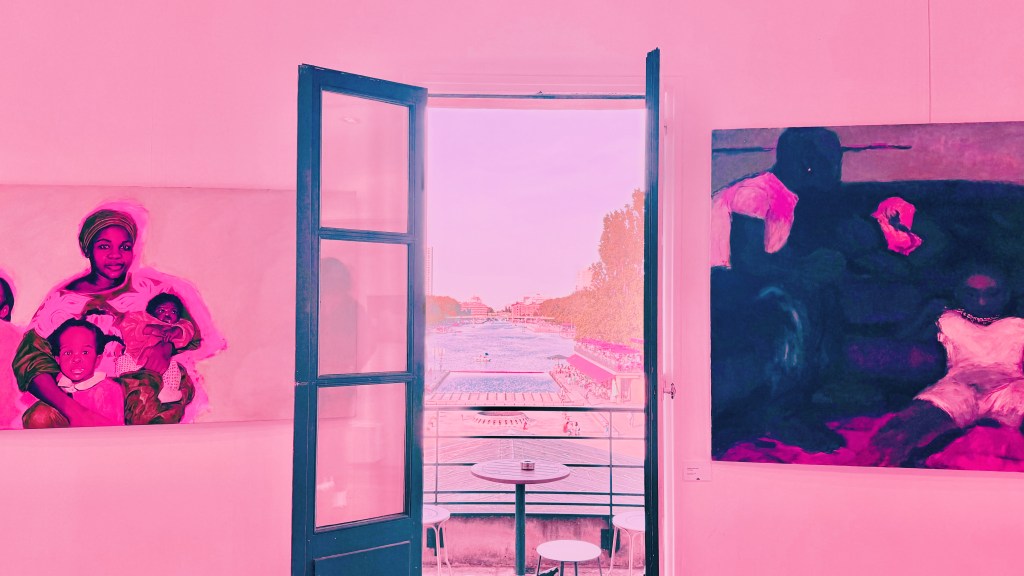
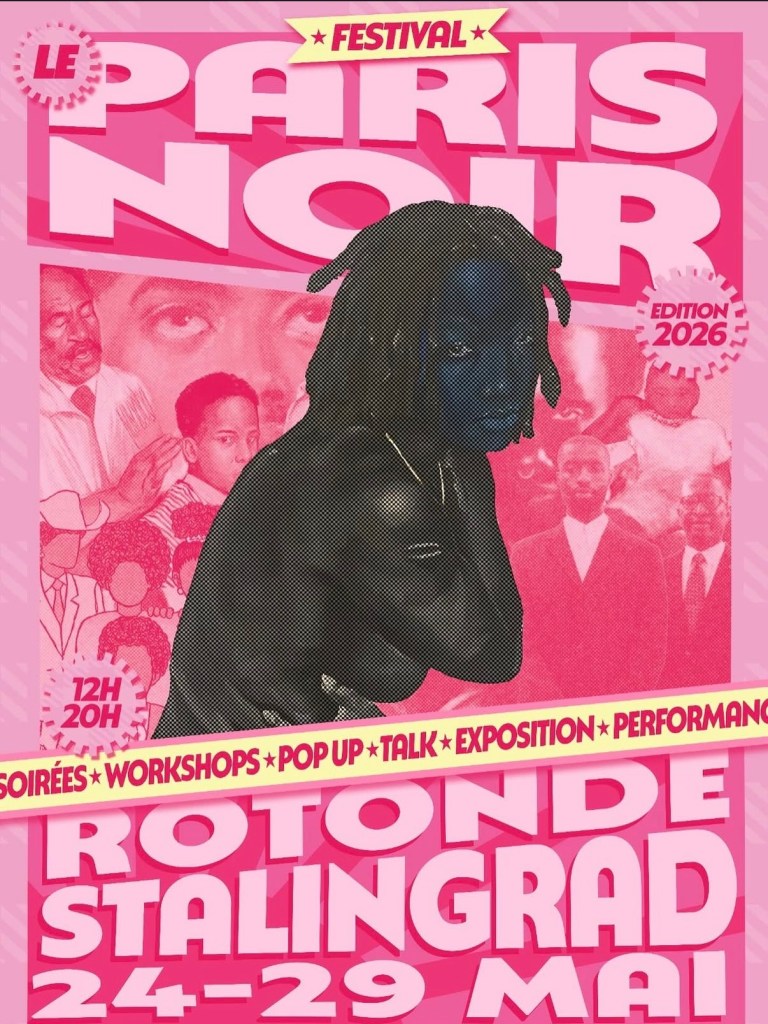
Still in its infancy but rapidly gaining momentum, Le Paris Noir, founded in 2025, is expanding on an unprecedented scale under the leadership of Paloma Dubois, the first Guadeloupean student to be admitted to Yale University. Following the success of its inaugural edition at Point Ephémère, the project moved to La Rotonde Stalingrad for its second edition, held from 24 to 29 May 2026. With a larger team, new artists and an expanded exhibition programme, Le Paris Noir is steadily establishing itself as a significant new player in Paris’ cultural landscape. Yet growth brings its own challenges : how do you reach a broader audience while remaining accessible, coherent and unapologetically political, without diluting the festival’s message or slipping into amateurism ?
The roots of the project : behind the scenes
A week before the opening night, the team is buzzing with activity. On the day’s agenda is a series of artist interviews led by the festival’s artistic director, Malé Houinsou, from the project’s informal headquarters : the Paris flat of founder Paloma Dubois. The space is packed with paintings, sculptures and bursts of colour that offer an early glimpse into the festival’s curatorial vision. An overflowing bookcase places Aimé Césaire alongside César, Basquiat and Chagall, while the six volumes of L’Historial Antillais sit comfortably beside Made in Banlieue. The same eclectic mix of references extends into Dubois’ bedroom, where, as she puts it, she has done « a bit of curation » herself. Posters of Damso and Aya Nakamura share the walls with a framed letter from Gaël Faye, books by Frantz Fanon and Léopold Sédar Senghor, and, at the far end of the room, a painting of Black Jesus. The interviews begin quietly. The five participating artists are invited to briefly present their work and explain how it connects to the festival’s broader themes. Asked how the piece she is exhibiting came into being, Kelly Reinette, whose self-portrait features prominently in this year’s visual identity, explains that she wanted to offer a less conventional representation of Black people through her blue-faced self-portrait. She adds that she applied to Le Paris Noir because of its explicitly « for us, by us » ethos. Jessy Maevarivelo, who works across design, fashion styling and DJing, is more succinct. « I was born an artist », she says. For her, Le Paris Noir represents the culmination of years of work and will also provide the opportunity to perform her first DJ set. Other participants, including Euxane Soumahoro and Thomas Jean-Louis, both students at the Ecole des Beaux-Arts de Paris, emphasise the importance of being surrounded by young Afro-descendant creatives working across a wide range of artistic forms. Euxane describes her participation as « essential » to her development as an artist, while Thomas speaks of his pride in contributing to what he sees as a growing cultural movement.
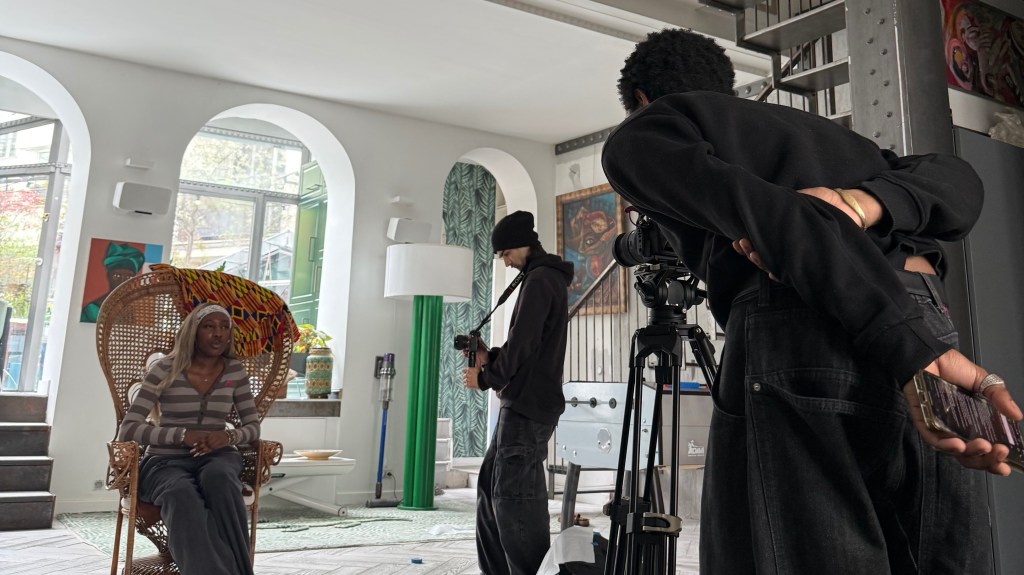
Later, on her terrace during an informal conversation, Dubois opens up about the personal experiences that led her to create Le Paris Noir. A former pupil of the prestigious Ecole Alsacienne, she describes an educational journey marked by academic success but also by numerous forms of what she calls « concealed » racism. « I spent a gap year in the United States, where I realised I wasn’t being paranoid about the racism I’d experienced, and that I had every reason to challenge the system behind it. When I arrived at Yale, I realised that highlighting my cultural heritage had actually strengthened my application. I started asking myself how I could give something back to the community that helped me get here. That’s how Le Paris Noir was born ». While she hopes to draw inspiration from certain aspects of American activism to advance the rights of Black people in France, Dubois is quick to point out the differences between the two contexts. « What I love about French culture is our directness, our café terraces, our shared public spaces. But we don’t really make political or social use of those things ». For her, part of the struggle begins with reclaiming language itself. She advocates for wider use of the term « Afro-French », which remains relatively uncommon despite what she sees as the centuries-long presence of Black French communities. Through recognition of that heritage, she hopes France might one day establish its own Black History Month while also strengthening educational initiatives around Black history and identity. That ambition, however, runs up against France’s republican model. The founder argues that the absence of ethnic statistics often functions as a convenient blind spot, allowing structural inequalities to remain unaddressed. She points, in particular, to what she describes as the disproportionate steering of Afro-descendant students towards vocational pathways during secondary education. Against this backdrop, she sees Le Paris Noir as an alternative platform. « It’s a cultural platform. Yes, we organise exhibitions that can sometimes resemble entertainment, but it’s also a space for dialogue where we can begin discussing these issues within the French cultural landscape ». To challenge what she perceives as the elitism of many Parisian cultural institutions, Dubois advocates for a deliberately independent approach. « I want it to be easy to access, financially accessible for artists, and demystified. I don’t care how people dress when they come to our events. I want them to be able to talk to the artists. Something genuinely simple. What matters to me is sustainability. I want people to recognise the quality of the project and remember it. My artistic direction is centred on strong artworks and meaningful messages that resonate with people’s experiences and encourage reflection. Last year worked so well because we weren’t pursuing profit. We were carrying a message ». A vision that remains a subject of debate within the team itself, where the artistic director advocates instead for what he describes as « elitism in quality », despite the festival’s free admission.
A few days later, at La Rotonde Stalingrad itself, the festival’s programming manager, Corentin, discusses the challenges and opportunities presented by hosting the event within one of Paris’ most recognisable nightlife venues. As he guides us through the building, he explains the layout. The atrium, which hosts the opening and closing events as well as workshops and market stalls, can accommodate up to 350 people. The exhibition itself occupies the first floor and is spread across three separate salons. For La Rotonde, welcoming Le Paris Noir forms part of a broader effort to renew its cultural offering by supporting « emerging voices » and helping shape what its team sees as « the future of Paris’ cultural and nightlife scenes ». By opening its doors to a project like Le Paris Noir, the venue hopes to move beyond the traditional boundaries of electronic club culture and engage with new audiences and communities. The collaboration also reflects La Rotonde’s wider commitment to supporting newcomers, offering emerging artists and collectives a platform during the early stages of their development. In that sense, Le Paris Noir aligns perfectly with the venue’s stated ambition of promoting « an accessible, inclusive celebration in all its forms ». The partnership is not entirely new. Last December, La Rotonde hosted an edition of Bunda Phaat, the event spearheaded by Esther Kouakou, one of Le Paris Noir’s core team members. Another instalment is scheduled to take place during this year’s festival. From a logistical perspective, the main challenge lies in balancing the various public and private events taking place throughout the week within a venue operating under strict time constraints. That is one of the reasons why the exhibition itself was located upstairs, ensuring smoother circulation and greater security. Corentin also clarifies the financial arrangement. Dubois is not being charged a venue hire fee, allowing the festival to remain free of charge. For La Rotonde, the partnership will therefore generate revenue solely through bar sales during the festival’s evening events. It is a promising alliance — one that will now have to prove itself in practice, before an audience that is growing alongside the ambitions of the project itself.
Beyond the courtesy of the opening night : the festival’s political awakening
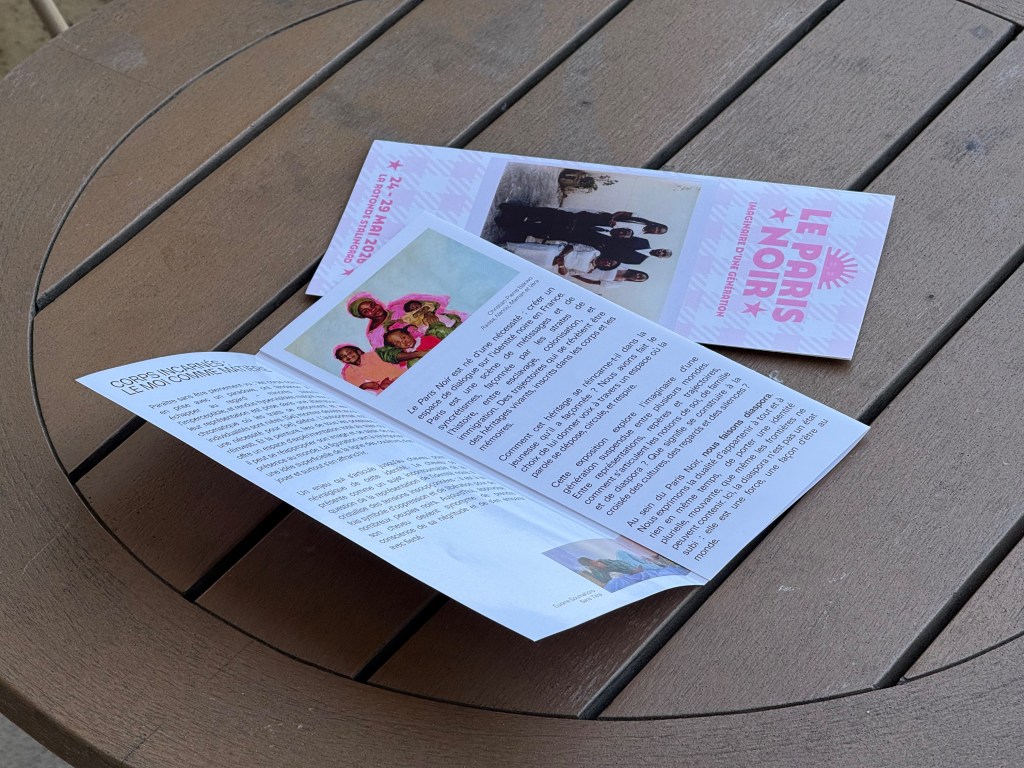
At around 7pm on Sunday 24 May, visitors finally begin filing through the doors of La Rotonde to discover the twenty or so works featured in this year’s edition of Le Paris Noir. Baggy jeans, bandanas and loafers — staples of Paris’ fashion-conscious youth — fill the three exhibition rooms. For La Rotonde, the gamble has already paid off. The venue has succeeded in attracting the audience it hoped to reach : a politically engaged Afro-descendant generation that is as present online as it is in cultural spaces, evidenced by the influencers in attendance and the constant stream of phones and cameras documenting each artwork. Yet the crowd is far from homogeneous. Families and regular visitors to La Rotonde are also among those making their way through the exhibition. Odile, a woman in her seventies from what she describes as « the middle of nowhere in the French countryside », shares her thoughts : « I think diversity brings a great deal. We learn from one another, they learn from us, and together we create a new culture ». Her remarks closely reflect the ongoing construction of an Afro-French identity. Back to the exhibition’s rooms, the artworks blend so seamlessly into the setting that the spaces gradually become places to sit, smoke, talk or even have dinner. Despite occasional bottlenecks caused by the turnout, Le Paris Noir succeeds in one of its core ambitions. Thanks in part to the informality of the setting, the exhibition rooms become genuine spaces of exchange, where conversations flow freely in both French and English. One Fine Arts student, who attended out of curiosity, describes the exhibition as accessible thanks to what she calls a « simple and relatively literal » curatorial approach. The accompanying brochure, however, strikes her as considerably more academic. Another visitor echoes her criticism of the brochure’s academic jargon : « If it doesn’t sound intellectual, people think it isn’t interesting. Why not make it simpler so it can reach a wider audience ? ». The exhibition’s curator, Euriell L. Luthello, a Master’s student in Art History, offers some insight into that apparent tension. « I see curation as the selection of artworks and artists around a specific curatorial argument. In this case, it’s about highlighting the work of emerging Black artists, not necessarily based in Paris. In fact, the exhibition’s Parisian identity isn’t immediately obvious because we wanted to remain within a broader reflection on the Black community ». Addressing the criticism directly, she explains that the exhibition text was inspired by catalogues from major exhibitions exploring similar themes, including When We See Us at MOCAA and even the Centre Pompidou’s own Paris Noir exhibition, which approaches these questions from a much more historical perspective. Yet one question remains unresolved : why does an exhibition so explicitly rooted in Paris, even in its title, draw so heavily on American references ? « I came to my identity through an Afro-American frame of reference before I came to it through a Parisian one », she explains. « I find it fascinating that so many Afro-descendant intellectuals have, in one way or another, passed through the United States intellectually. Perhaps conversations there are simply less inhibited when it comes to subjects that remain difficult to articulate here. At the same time, it’s important to stay grounded in Paris. That tension is part of my own reflection as well. It’s something worth thinking about ».
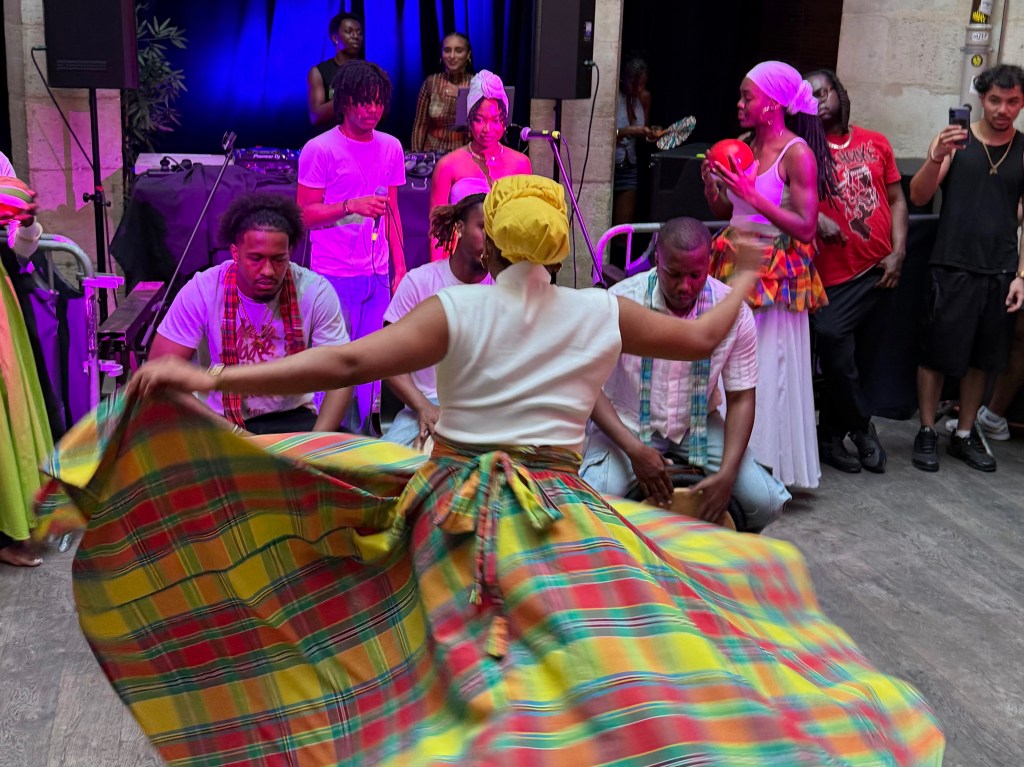
An hour later, visitors are invited to gather in the atrium, which until then has been animated by a succession of DJ sets. Among the crowd, the vibrant silhouettes of young women dressed in colourful madras fabrics hint at what is about to unfold. Eventually, nearly ninety minutes after the official opening began, Paloma Dubois takes to the stage. Surrounded by members of her team — Esther Kouakou, Euriell L. Luthello, Sarah Thernier and Malé Houinsou — she reiterates the ambition she had previously shared with us : to celebrate Afro-French identity in all its diversity. DJ sets, workshops and community stalls, she explains, will all form part of the festival’s annual programme. The speech is brief. Although the participating artists have been invited onstage, they are not formally introduced. Instead, the ceremony concludes with warm applause before giving way to a group of percussionists and gwo ka dancers. What follows is one of the evening’s most memorable moments. For more than forty minutes, the collective Jénès Gwadloup takes over the stage. Driven by the relentless rhythm of the drums, dancers move in a swirling procession of madras skirts and choreographed gestures, building towards a striking finale : a song honouring their Guadeloupean heritage, performed collectively by the women of the troupe. For Billy, the collective’s founder, preserving and transmitting this culture is essential. « We want to put it on the world stage », he explains. Given that gwo ka emerged directly from the history of slavery — its drums originally crafted from barrels used on slave ships — its presence within the festival feels particularly meaningful. Yet the transition to the rest of the evening’s programme reveals one of the festival’s underlying tensions. Soon after, the turntables take over and the focus shifts towards club culture, culminating in a performance by D Juno, whose track « BB Bringue » recently gained significant traction online. The booking is understandable, perhaps even necessary. Yet the contrast is striking. Moving from the historical depth and collective memory embodied by gwo ka to the immediate energy of contemporary club music throws into sharp relief one of the festival’s central ambiguities : its desire to balance remembrance and celebration, political consciousness and entertainment.
By the following afternoon, the atmosphere at La Rotonde has changed considerably. The energy is quieter, more intimate. That shift is mirrored online, where the festival’s social media presence largely focuses on images from the previous night’s festivities, often at the expense of the visual artworks themselves. In doing so, the visibility promised to artists appears increasingly tied to the event’s nightlife dimension. Within the exhibition spaces, visitors frequently praise the vibrant colour palettes and pastel works of Euxane Soumahoro. Yet the broader theme of diaspora proves more difficult to communicate visually. Many of the exhibited works are deeply personal in nature, making the exhibition’s overarching narrative less immediately apparent. Without detailed wall texts or prior interviews with the artists, a recurring observation begins to emerge among visitors. « You leave the exhibition with more questions about the artists themselves ». By adopting communication strategies closer to those of a pop-up concept store than a traditional exhibition, Le Paris Noir occasionally risks limiting itself to a relatively narrow audience.
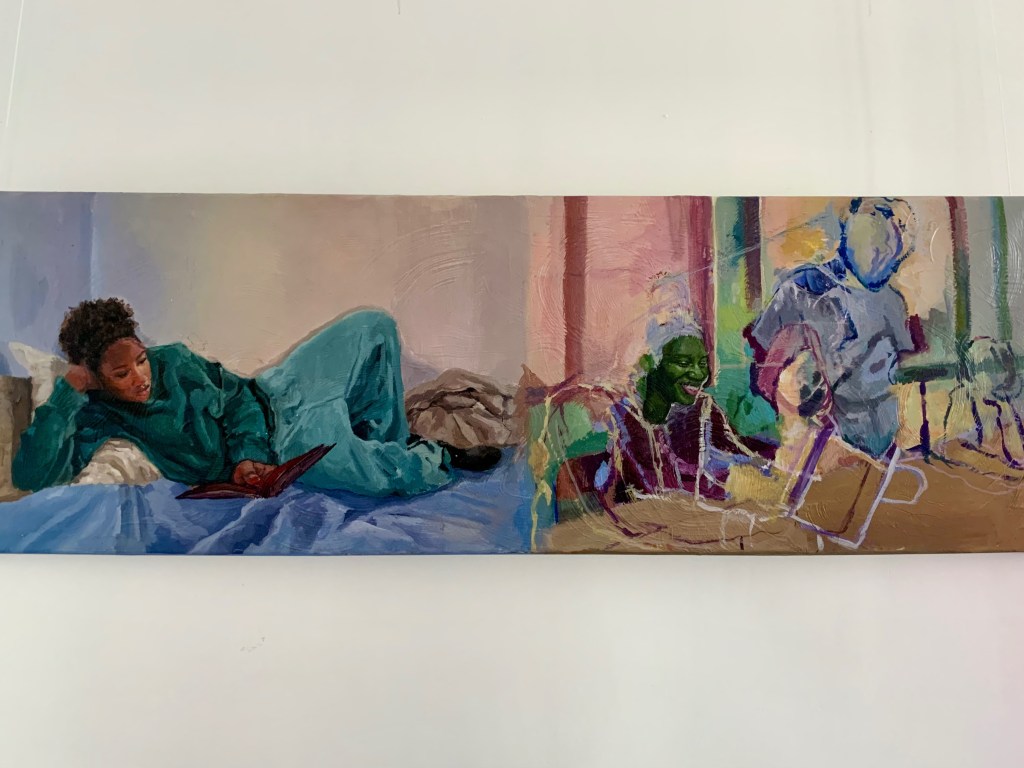
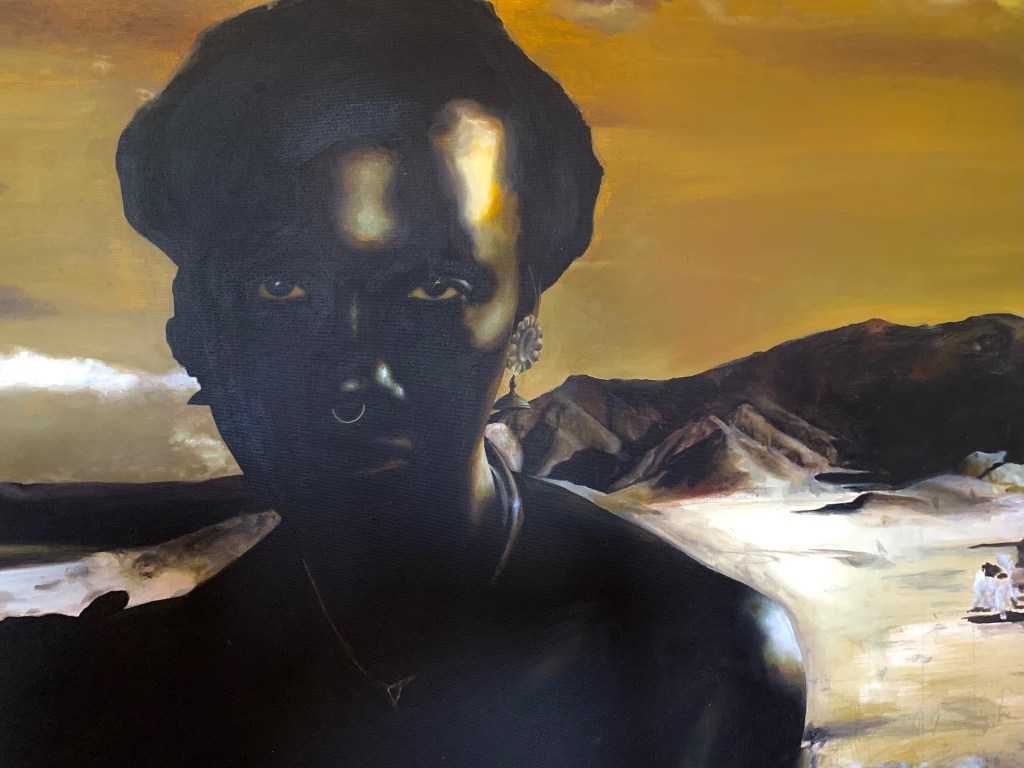
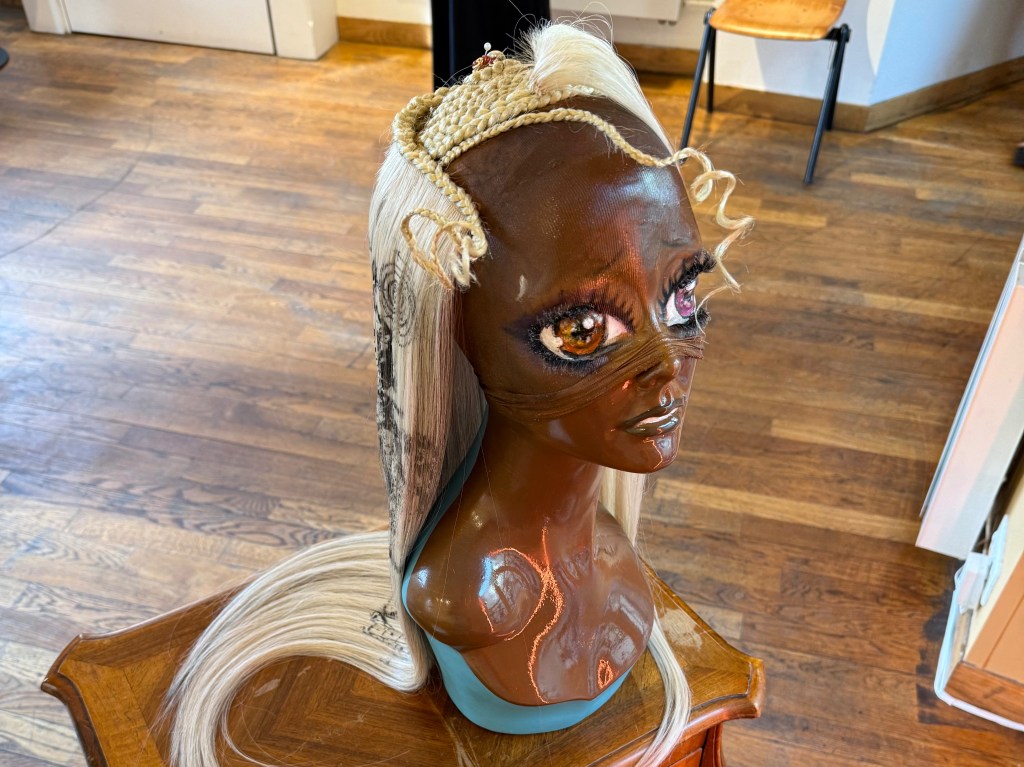
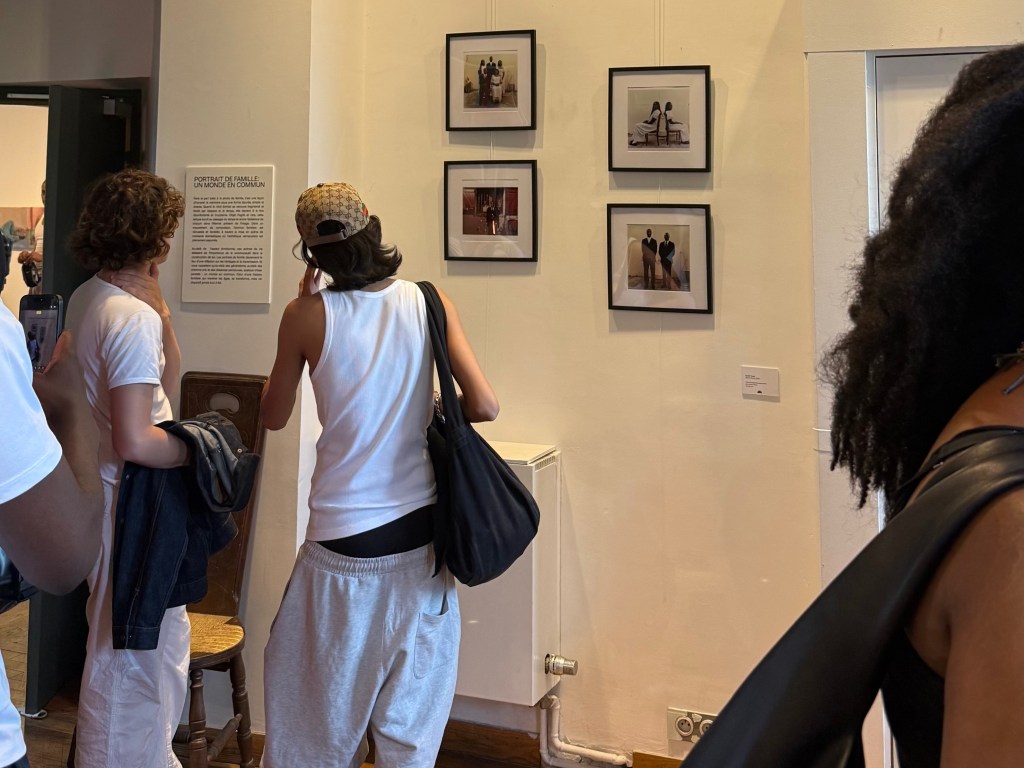
Yet by early evening, the festival regains a stronger sense of direction. Around fifty people gather around a small market featuring exhibitors with distinctive identities and aesthetics. Pan-African bracelets decorated with Adinkra symbols by Kvle sit alongside crochet garments from Hybrid Hook, custom grillz by Kraken Factory and creations from Exotic4tp. It is within this setting that the festival’s most intellectually ambitious event takes place : a discussion dedicated to Afro-French identity. Far from functioning as a simple cultural gathering, the talk provides the festival with a clear theoretical and political framework. To lead the conversation, organisers invite two prominent academic voices : Cassandre Surinon, a clinical psychologist whose doctoral research focused on the historical trauma of the transatlantic slave trade in the French Caribbean, and Kevin Beltou, a Yale doctoral researcher specialising in Black and Francophone political thought. At the centre of the discussion lies the question of Afro-French identity, approached not as a fixed essence but as a profoundly political position. The speakers draw compelling parallels with W.E.B. Du Bois’ concept of double consciousness and the fifth chapter of Frantz Fanon’s Black Skin, White Masks, arguing for the importance of reclaiming multiple histories in response to the persistent expectation that Black people justify their place within French society. Through examples such as Bally Bagayoko and Mamoudou Gassama, they examine how racial narratives inherited from the era of slavery continue to shape access to Frenchness, often through expectations of exceptional achievement, respectability or social usefulness. This discussion resonates strongly with the family portraits exhibited by artist Izudin Yusuf, whose work reflects contemporary tensions between narratives of the so-called « Great Replacement » and competing visions of a multicultural France. Rejecting any notion of cultural or racial purity, both speakers present Le Paris Noir as an essential space for dismantling stereotypes and reclaiming the ability to tell one’s own story. For Surinon, that process requires France to finally « look itself in the mirror » and move beyond what she describes as its self-image as a benevolent nation. « All institutions in France are permeated by racism », she argues. Confronted with this reality, she calls for a more confrontational approach to anti-racist politics, insisting that activists must « accept being perceived as threatening » rather than constantly trying to reassure white audiences.
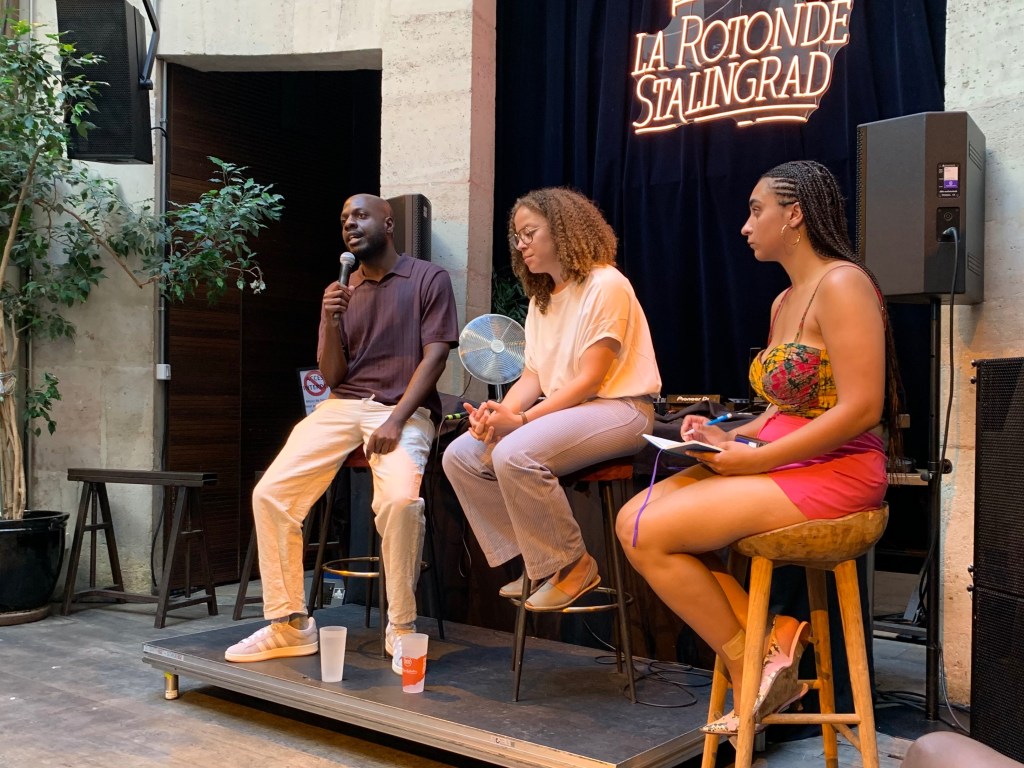
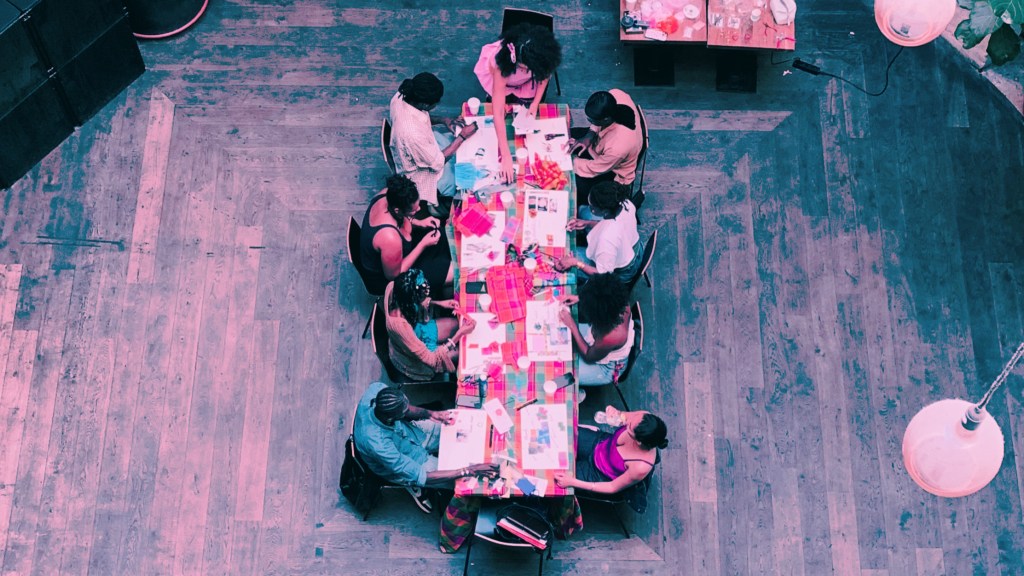
Beltou echoes that sentiment while describing Le Paris Noir as a form of « counter-institution ». At the same time, he insists on intellectual rigour. « Being Black is not enough », he argues, if visibility is not accompanied by critical reflection on the ideological frameworks that shape representation. He also warns against certain excesses associated with American identity politics, particularly the commodification of Black excellence, although one audience member notes that the United States still represents, for many, a space where « our stories can be told ». Seeking to define Blackness itself, the two speakers offer complementary perspectives. Where Beltou emphasises phenotype, ancestry, culture and history, Surinon insists on the lived, embodied experience of race. The discussion’s theoretical density sparks lively reactions from the audience, who challenge the speakers on the usefulness of terms such as « Afro-French », « Black », and on the existence of tensions within Black communities themselves. After more than an hour of discussion, conversations continue long after the official event has ended. Small groups form throughout the venue, debating, questioning and expanding on the ideas raised during the talk. In that sense, the event is an undeniable success. It provides Le Paris Noir with the political depth and intellectual substance that its organisers clearly hope to cultivate. Yet this emphasis on political commitment also invites scrutiny of another aspect of the festival’s messaging : its claims of solidarity. While Paris Noir stated at the end of the talk that profits generated by the Exotic4tp stand « support the Congolese humanitarian cause », our investigation raises questions about the traceability of that claim. Through our research, we were able to identify the humanitarian organization backed by the brand : the NDOMBA Foundation, which had not even been mentioned by Paloma during the discussion. This initial lack of clarity unfortunately highlights a transparency issue that is particularly sensitive within the humanitarian sector, where ethical standards and practices can vary considerably. Nevertheless, beyond these unresolved questions and the theoretical debates that animated the weekend, Le Paris Noir ultimately comes alive through something more immediate : a collective experience that is immersive, dynamic and deeply human. The second part of this report will explore the festival’s creative and celebratory dimensions, from the interactive workshops led by Yam’s and Carmen Joachim to the long-awaited return of Bunda Phaat.
 OUTERNET MAGAZINE
Laisser un commentaire