
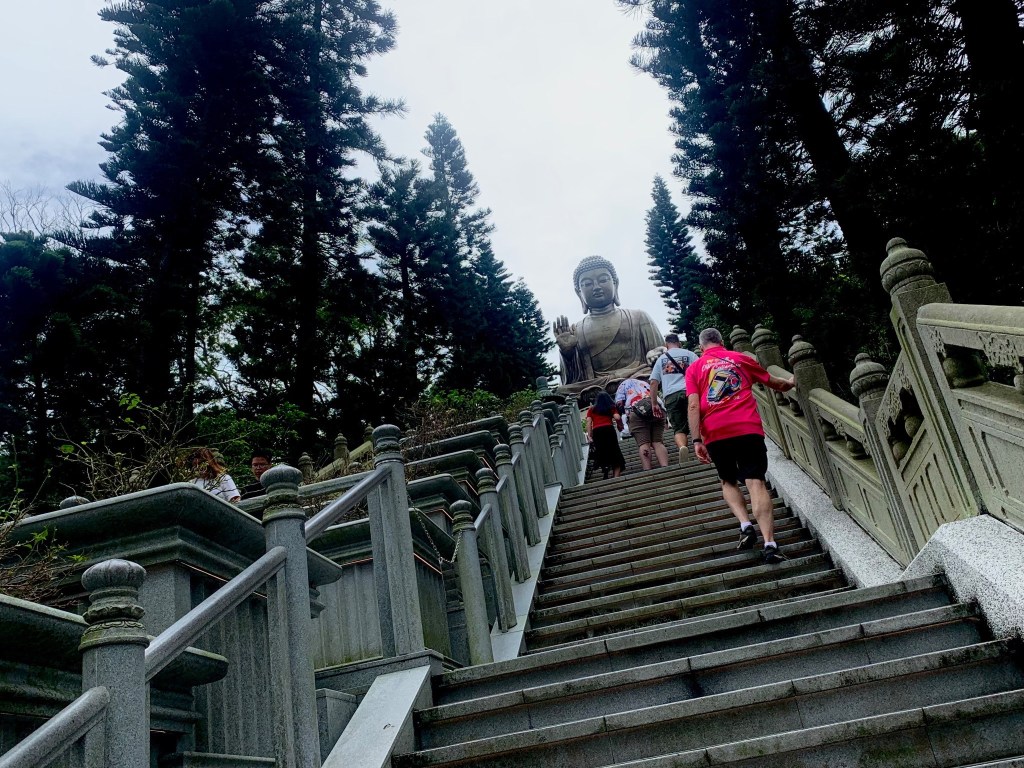
Two months of vacation in China, Japan and Thailand, divided between local immersion and assumed tourist reflexes, revealed to me the same mechanism : the emergence of a predatory traveller. From Koh Tao’s adult Disneyland to the crocodile tears of a Westerner in a Japanese temple, the tourist shapes the continent according to his instincts. Between cultural fetishism, intimate catharsis and geopolitical tensions, analysis of a consumed Asia as the therapeutic setting of the Westerner in search of meaning and truth.
What is a « good traveller » ?
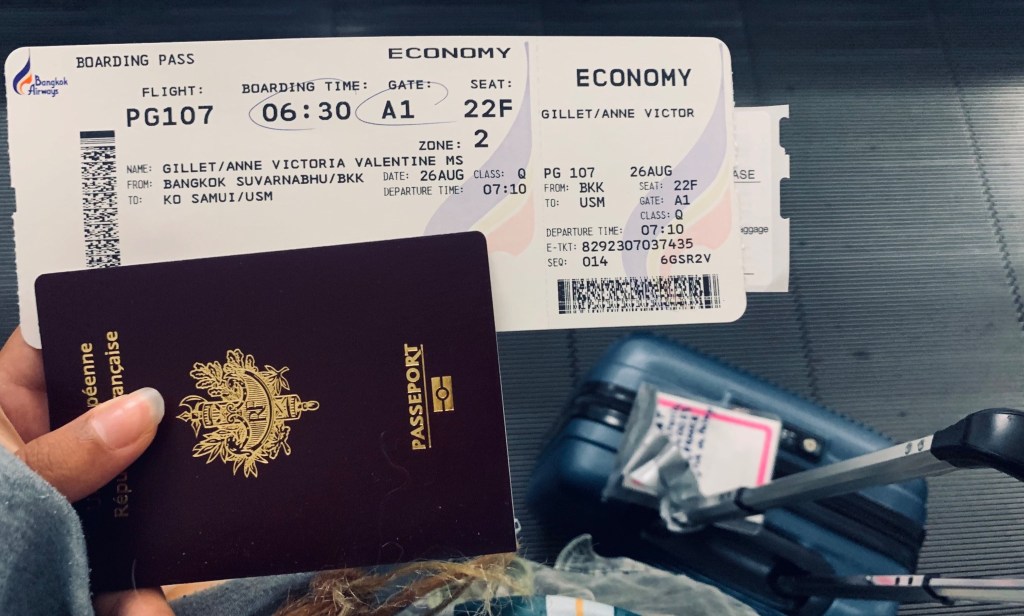
For two months, my itinerary drew a continuous line through China, Japan and Thailand. I shared the daily life of a Japanese family, talked to students in Tokyo, had dinner with a finance bro in Shanghai, listened to Thai traders and shared drinks with backpackers passing by. However, it would be dishonest to extract my own presence from the painting. Despite these different immersions, I too have given in to the logic of contemporary travel. I took these photos, frequented these tourist cafes, borrowed these instagrammable itineraries. This is precisely where the starting point of a lucid observation is located. No one completely escapes the condition of tourist, as long as he crosses a territory with a Western passport.
For sociology, the tourist is not simply an individual on vacation but rather a social and economic role. Jean-Didier Urbain, in L’Idiot du voyage, recalls that the modern desire to escape is almost always accompanied by the search for a setting rather than a real social fabric. For his part, the American sociologist Dean MacCannell theorised the notion of « staged authenticity ». The Western traveller would thus leave in search of a « true » otherness, but would unconsciously demand that it be scripted, secure and in accordance with his previous imaginations. Did Asia then transform through our presence into a vast surface of hedonistic projection, where local culture is called to adapt to the Western gaze ?
A show territory : from the hedonist enclave to cultural taming
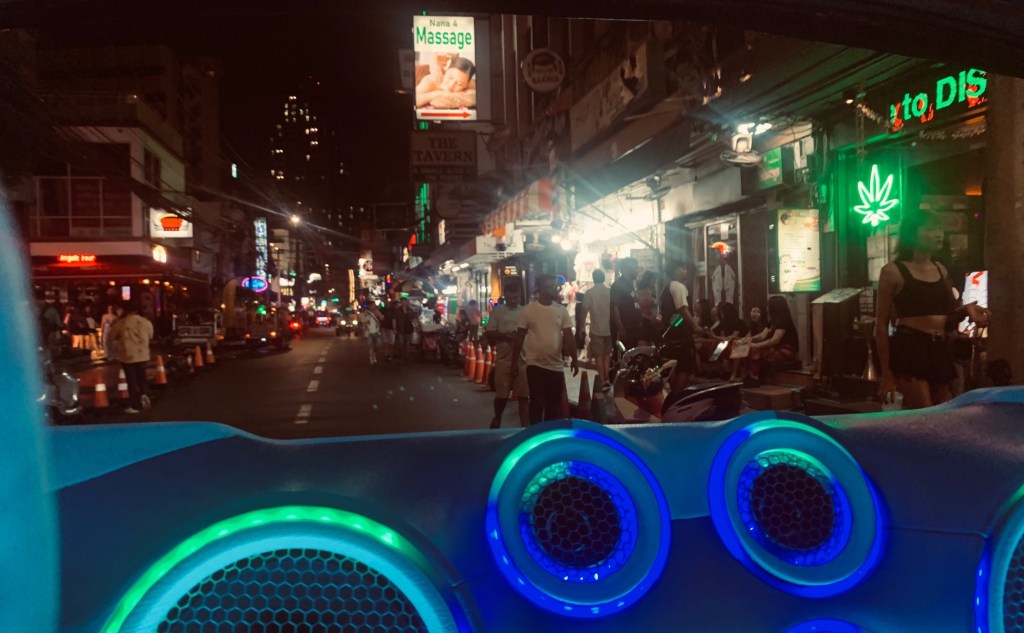
I land on the island of Koh Tao to see the speed at which a place, highly touristy, can dissolve in its recreational function. In the middle of the alleys lined with palm trees, the signs are displayed in a provocative Spanish or English. A diving club, soberly named « Puta Madre », rubs shoulders with rows of fluorescent cannabis coffee shops, open to the chain since the decriminalisation of 2022. Curious display since mid-2025, the Thai government has toughened its cannabis use policy.
On paper, the use of cannabis is now restricted to the medical framework alone and punishable by a fine of 60,000 baht or 1560 euros. In fact, this takeover is a big joke. Between my first passage to the summer of 2024, at the height of decriminalisation, and the observation made on site in 2026, the reality of the field has absolutely not moved. From stores to sellers on the sly, recreational trade continues in complete autonomy. No medical certificate is required at the counter and no control hinders the transaction. Between the formal requirement of the texts and the trivialised tolerance of everyday life, the regulation is rather similar to a simple administrative varnish, swept away by the strength of this resolutely installed economy.
Here, the Thai language is gradually fading and the local economy revolves almost exclusively around the management of Western impulses : Jungle Party, drug use of all kinds and access to a very affordable sex market. I often told myself that for some Westerners, coming to Thailand was a bit like going to Disneyland. I didn’t think I was saying so well since « Disneylandization » is a well-existing concept and theorised by geographer Sylvie Brunel. This is the transformation of a real space into a secure amusement park, freed from the moral and social constraints of the host country. In the same thought, sociologist Marc Augé speaks of « non-places »: spaces that are the fruit of an era of « overmodernity », deterritorialized, interchangeable, disconnected from the history and values of the society that houses them.
I thus had to deal with a German fifty-year-old, a victim of this phenomenon and absolutely transcended by Thai nightlife. Truly transported by her own memories of drunken evenings, she tries to convince me, during a speech of about twenty minutes, of the absolutely « amazing » benefits of the different bars on the island. She assures : « If you tell that you came to Koh Samui without going through the Ark Bar, people will tell you that you didn’t really see Koh Samui ! « . In this bubble of total impunity, the tourist does not meet Thailand. He evolves within a simulacrum, a vacuum version customised to satisfy his hedonistic quest.
This consumption requirement extends to the cultural matter itself. In China, the traditional Qipao dress or the historical Hanfu are regularly retouched for the needs of passing tourists. The cuts are shortened, the necklines are accentuated. The traditional outfit, whose original cut responds to codes of modesty, social status and history, is emptied of its substance to adjust to a form of exotic eroticisation. At the heart of this rewriting of folklore, the tourist does not seek to apprehend the difference in its complexity or constraints, but demands that it be submissive, attractive and immediately consumable.
Asia-therapy or the temple of egotrip : spirituality as a setting
Appropriation is not limited to letting go of the partying : it is sometimes embedded directly in the flesh, as evidenced by my meeting with a young German traveller crossed in China. His body is covered with symbols tattooed throughout his Asian steps, superimposed on his skin like the stamps of a tourist passport. It is no longer just a matter of fantasising about Asia through stories, but of practising what is called symbolic extractivism. That is to say, to appropriate and take ritual motifs from their sacred substrate to empty them of their social and moral charge. More generally, this process refers to how a dominant culture appropriates, exploits and merchandises the knowledge, stories, images, rituals or symbols of marginalised communities.
For years, I too wanted to get a Sak Yant tattooed. Fortunately, after many doubts, I did not make this tremendous mistake. Where Thai Sak Yant traditionally requires respect for strict ethical precepts, under the tutelage of a master, and where Irezumi remains stigmatised in Japanese society because of its marginal historical anchorage, the traveller benefits from a privilege of asymmetry. Exempt from the taboos and constraints that weigh on locals, the Occidental converts these symbols into simple social capital. The tourist’s body is transformed into a personal museum where this « great trip to Asia » is consumed, engraved and exhibited as a cosmopolitan trophy, without the cultural responsibility of the motif ever being borne or assumed.
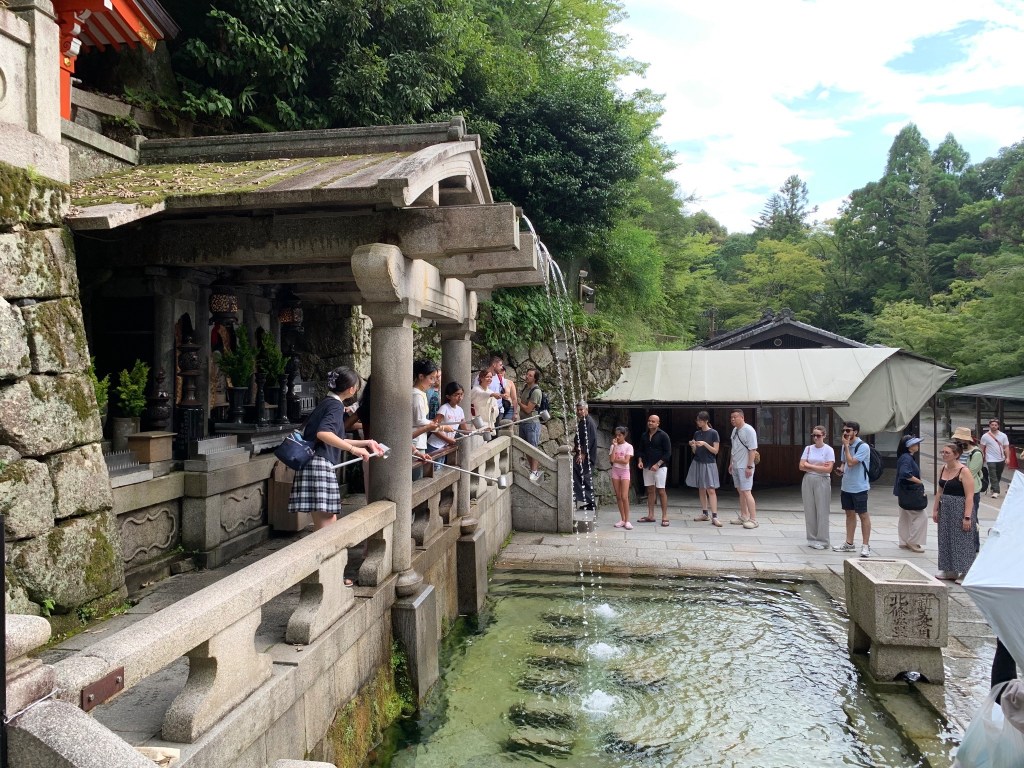
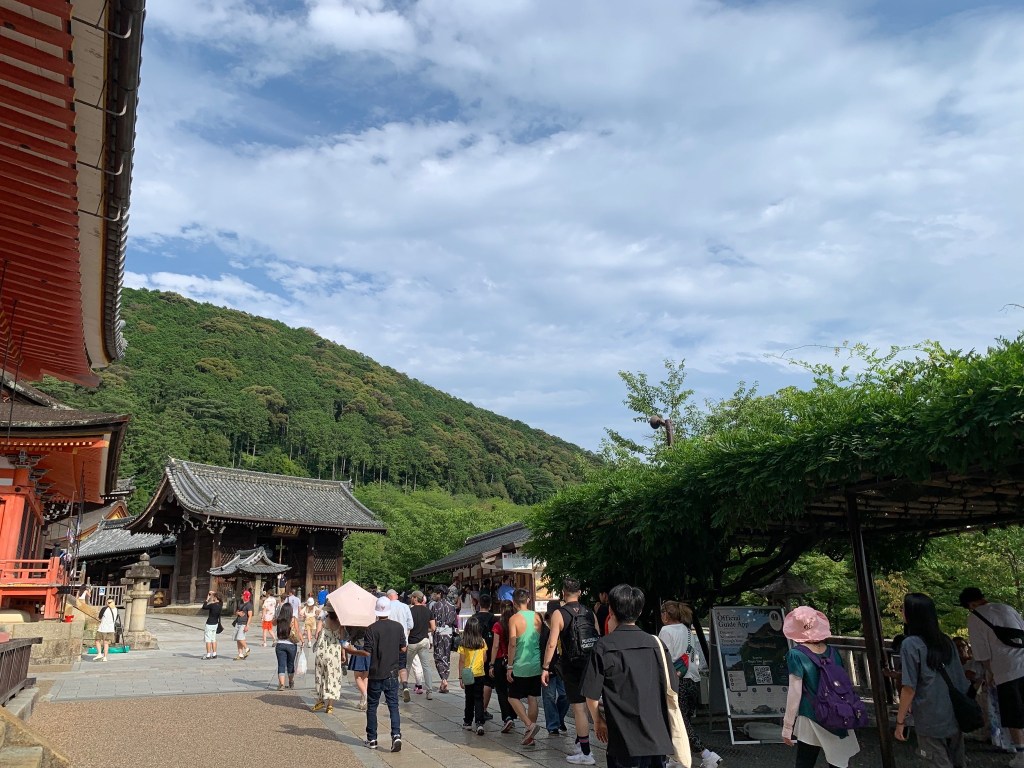
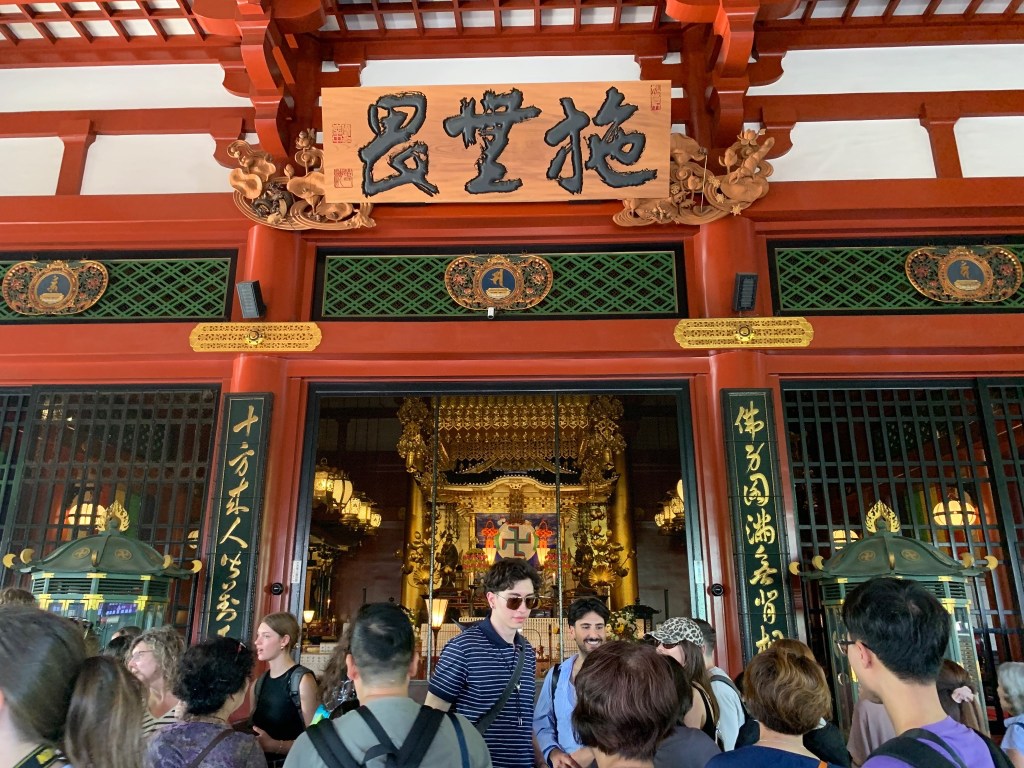
The instrumentalisation of the Asian decor reaches its climax when local spirituality is converted into a simple personal development studio. Let me tell you. The scene takes place in the heart of a temple in Japan, a space traditionally ruled by restraint, silence and sobriety. A white man breaks down in tears and repeatedly brandishes his hands towards the sky, dramatising his emotional distress in front of the mesmerised faithful. Through his pious performance, his incessant comings and goings and his occupation of sacred space, he succeeds in transforming a place of collective devotion into the scene of an individual drama.
This show can illustrate a certain spiritual narcissism, or I would say, the consumption of Asia as open-air therapy. In the continuity of the stories of personal emancipation à la Eat Pray Love, the Asian sacred space is often assimilated to the place of a necessary initiatory journey, designed to absorb Western existential neuroses and crises. By imposing his catharsis in the middle of a ritual or a place of worship, the traveller does much more than simply stage himself. The monks, the local faithful and the centuries of tradition that surround it are relegated to the rank of simple extras of an inner monologue. At that precise moment, I realised that some tourists do not seek to listen to the country in which they are, but rather to use it for what it allows to show and express about them. I will not go into the details of Japanese soft power and the obsession that Westerners have with these islands, which would deserve an entire article. Nevertheless, I can affirm and reaffirm that Westerners in Japan live a tourist experience close to a form of commercial, religious, social and aesthetic trance.
From space capital to post-colonial solipsism
The instrumentalisation of the territory is first of all articulated within the new migration policies. On the side of Thailand, the State displays a firm speech embodied by the doctrine of the Three Nos: « No Entry, No Stay, No Escape », associated with the generalisation of ETA, the tightening of the visa exemption reduced to 30 days compared to 60 days before and the nearly 300,000 tourist expulsions registered in early 2026. Nevertheless, this lockdown on short-stay tourism coexists with tailor-made access reserved for solvent Western tourists, thanks to the implementation of the DTV (Destination Thailand Visa) tailored for digital nomads.
This dual migratory regime not only organises a border filter, but lays the institutional foundations for a capital-based installation privilege. On the Thai islands, the relationship to the territory goes beyond the simple tourist stopover. It is perpetuated by the installation of French or Israeli residents founding their own structures. This presence is all the more based on a very attractive structural monetary asymmetry. In the sociology of space, this disparity of purchasing power is converted into spatial capital, that is, the ability to buy the soil of the Other, to shape its landscape and to impose its own consumption codes on it. By privatising entire parts of the island economy, these actors ultimately create spaces where the local population is relegated to subordinate roles.
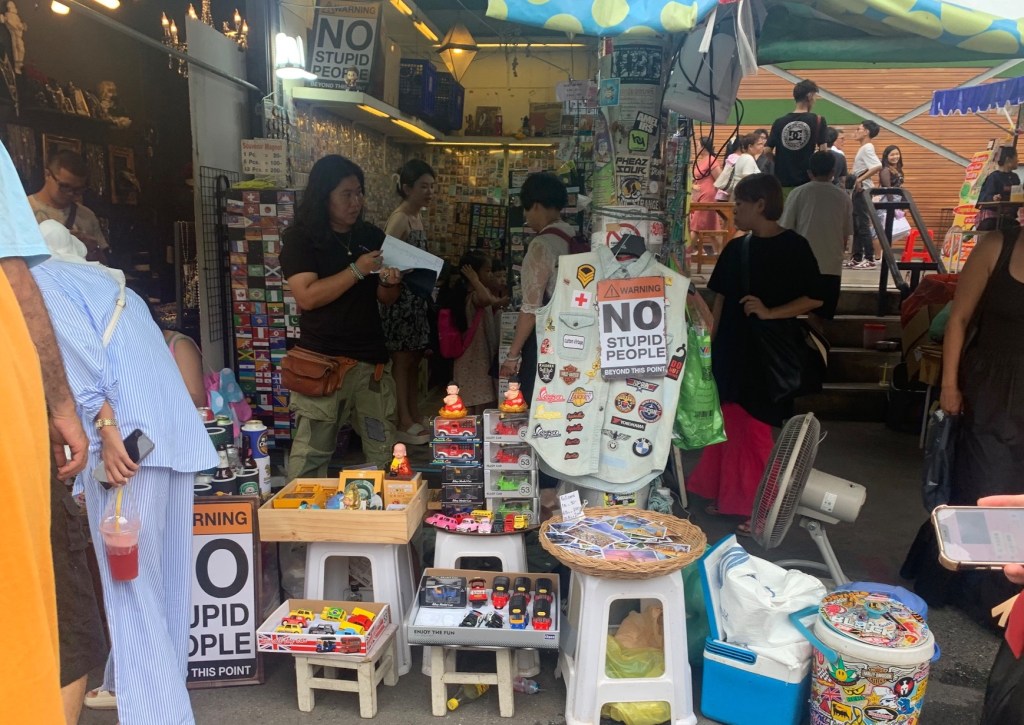
But this economic capture ended up exploding local anger. At the beginning of September, in Bangkok and Phuket, unprecedented demonstrations refocused the debate by targeting the massive influx of tourists and Israeli soldiers, accused by the inhabitants of wanting to « colonise Thailand ». This popular boredom joins the saturation observed in Japan and particularly in Kyoto, where the pressure of overtourism and citizen exasperation in the face of incivility reflect the same rejection of spatial dispossession throughout Asia.
This economic appropriation is accompanied by a mythology of the « pioneer » where the Westerner stages himself as the founder. This is the example of Fernando, a famous host of the Muay Thai battles in Koh Samui, who publicly prides himself on having been « the first white man to settle here! « . Behind this somewhat heavy joke, the formula is revealing and reactivates the colonial myth of the explorer. In this same rhetoric, the history of the territory and its inhabitants is made invisible until the white eye comes to validate it. Even a secular martial art like Muay Thai is thus reappropriated and embodied by a Western figure, who transforms its anchorage into a symbolic property title. This dynamic of closure reaches its climax when the Western presence becomes explicitly exclusive. The recent episode of a race in Bali organised by a European running club, having refused access to the premises, is the crudest demonstration. This spatial segregation re-plays, under the varnish of sport and well-being, the mechanics of 19th century concessions. The native population is ousted from its own territory, reduced to a simple natural theatre reserved for the exclusive fulfilment of the Western visitor.
But, this physical closure also finds its psychological counterpart in large metropolises. In Shanghai, I met a millionnaire from Saint-Malo, a small Breton seaside resort. Manager of a large company and settled in China for more than a decade, this man admits to having no Chinese friends and not mastering the language: « There is nothing to do in China […] Have you seen Chinese women?! » He chuckles. I found it strange but ultimately not surprising, the French having the reputation of evolving in their self abroad. This distancing is not only a question of tourist attitude, it is a matter of a real Western solipsism. In its sociological dimension, this term refers to such an absolute self-centredness that the individual lives closed in on himself. The environment and the people around it are no longer perceived as autonomous realities, but as a simple set or extras intended to serve one’s own personal story. Locked in its bubble, the host society no longer has its own existence and lives only through the services it renders it. Above all, in the eyes of this entrepreneur, the economic, social or even political reality of China is directly linked to his singular experience. Cultural isolation and contempt for the host society are no longer questioned as personal flaws, but sublimated in an entrepreneurial martyr’s posture. By dramatising his suffering as a builder in the middle of a world he refuses to learn, he seems to be trying to preserve, on his scale, the illusion of a Western moral greatness in full decline.
Deposition and dislearning
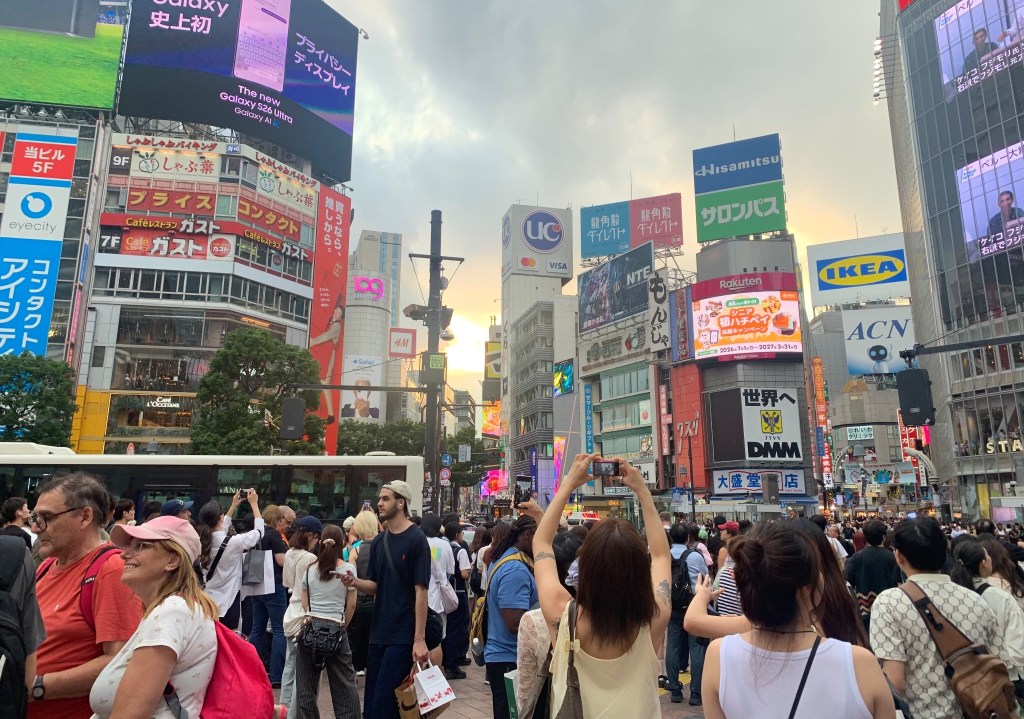
This journey does not end on a certainty, but on a dislearning. At the end of these roamings, the challenge is no longer only to point the finger at the « bad tourist » or the « expatriate », in fact an immigrant, locked in his bubble, but to question our own presence in the world. By surveying these territories where the West seeks as much to regenerate itself as to impose itself, I realised that the most insidious trap lies in the desire to bring something back: an image, a spiritual illumination, a sacred tattoo or a privileged social status.
The real break is not to consume Asia better, but to stop making it the scene of our projections. It is to admit that the beauty of a place and the depth of a culture reside precisely in what escapes us. As long as we measure the journey by what it brings us, we will remain the heirs of this colonial counter. Finally, the culmination of the journey lies in this ability to stand on the edge, that is to say to look without capturing, to cross without occupying what does not belong to us.

 OUTERNET MAGAZINE
Laisser un commentaire